
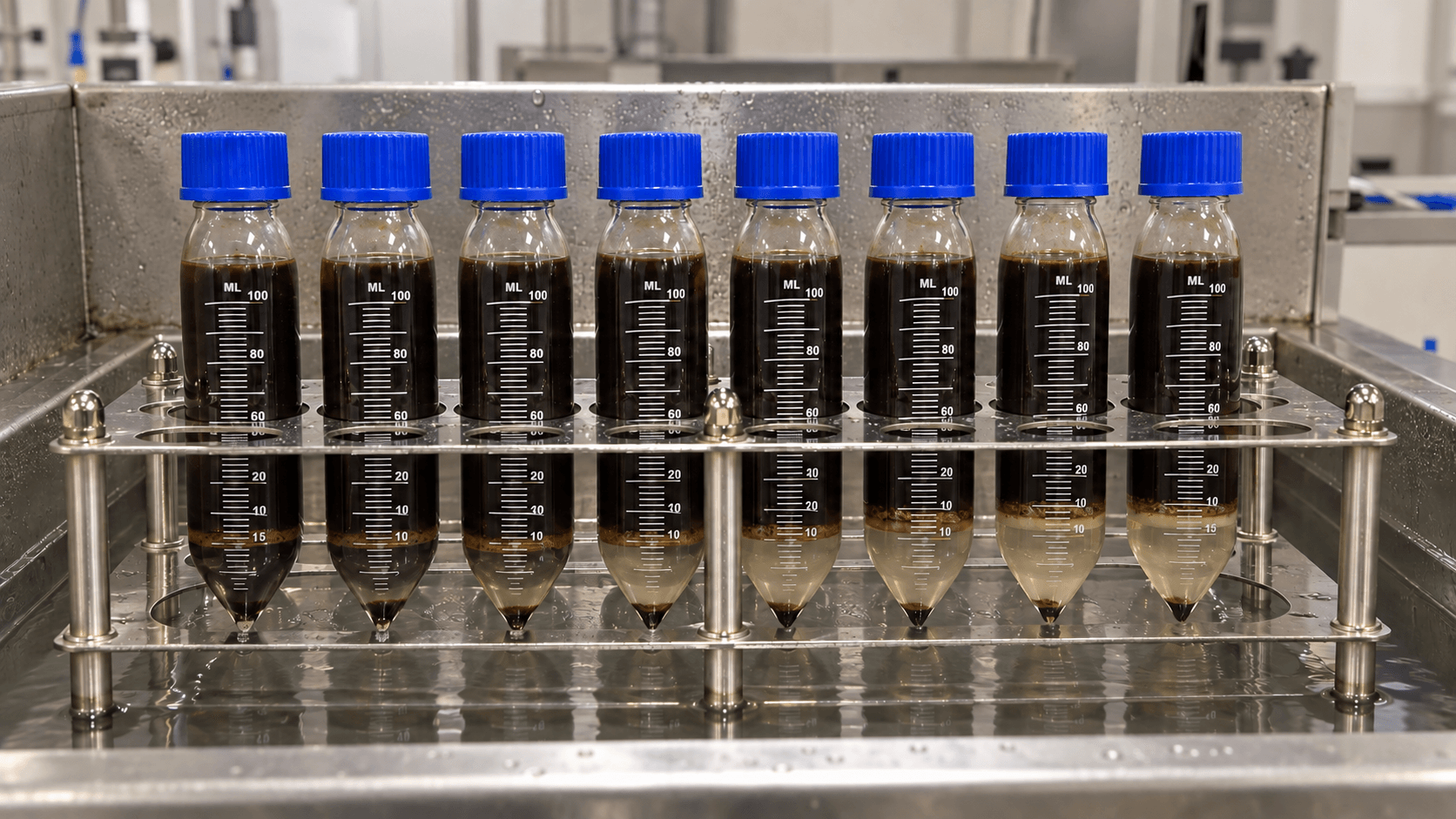
Crude Oil Demulsifiers: Selection Challenges
Demulsifier performance depends on crude composition, emulsion characteristics, water cut, salinity, temperature, residence time and process conditions. A product that performs well on one crude may require adjustment when feed composition or operating conditions change.
Our approach
Horizons Apex supports customers through structured demulsifier screening, bottle testing, formulation adjustment and field-trial planning. Candidate selection is guided by separation speed, water quality, interface quality, residual emulsion and the operating conditions of each application.
Typical applications
- Crude-oil dehydration and desalting support
- Product screening for changing crude and process conditions
- Troubleshooting persistent or unstable emulsions
Technical support
- Bottle-test design, evaluation and interpretation
- Blend and dosage optimization
- Assessment of separation speed, interface quality and water clarity
- Field-trial planning and performance follow-up
Technical reading
For a deeper review of the active chemistries behind crude-oil demulsifiers, including EO/PO polyethers, resin alkoxylates, polyamine-derived structures and their interfacial roles, read Demulsifier Base Chemistries: How They Are Made and How They Work.
For the crude and emulsion fundamentals behind product selection, read Crude Oil Types and Petroleum Emulsions. For a practical evaluation workflow, see How to Perform a Demulsifier Bottle Test. Use the Demulsifier Dosage Calculator to convert crude flow and chemical injection rate to ppm (v/v), or calculate the required L/day for a target dosage. For field and laboratory diagnosis of slow water drop, rag layers, dirty separated water and high BS&W, see the Demulsifier Troubleshooting Guide. To record, compare and rank laboratory results, use the Demulsifier Bottle-Test Workspace. For a broader structured operating review, open the Oilfield Chemical Problem Solver.
Start with your application
Share your crude type, water cut, operating temperature, residence time, current dosage and separation target to begin a focused technical review.
Product availability, chemistry, concentration, packaging and regulatory status may vary by market and application. Final recommendations are subject to technical and commercial review.