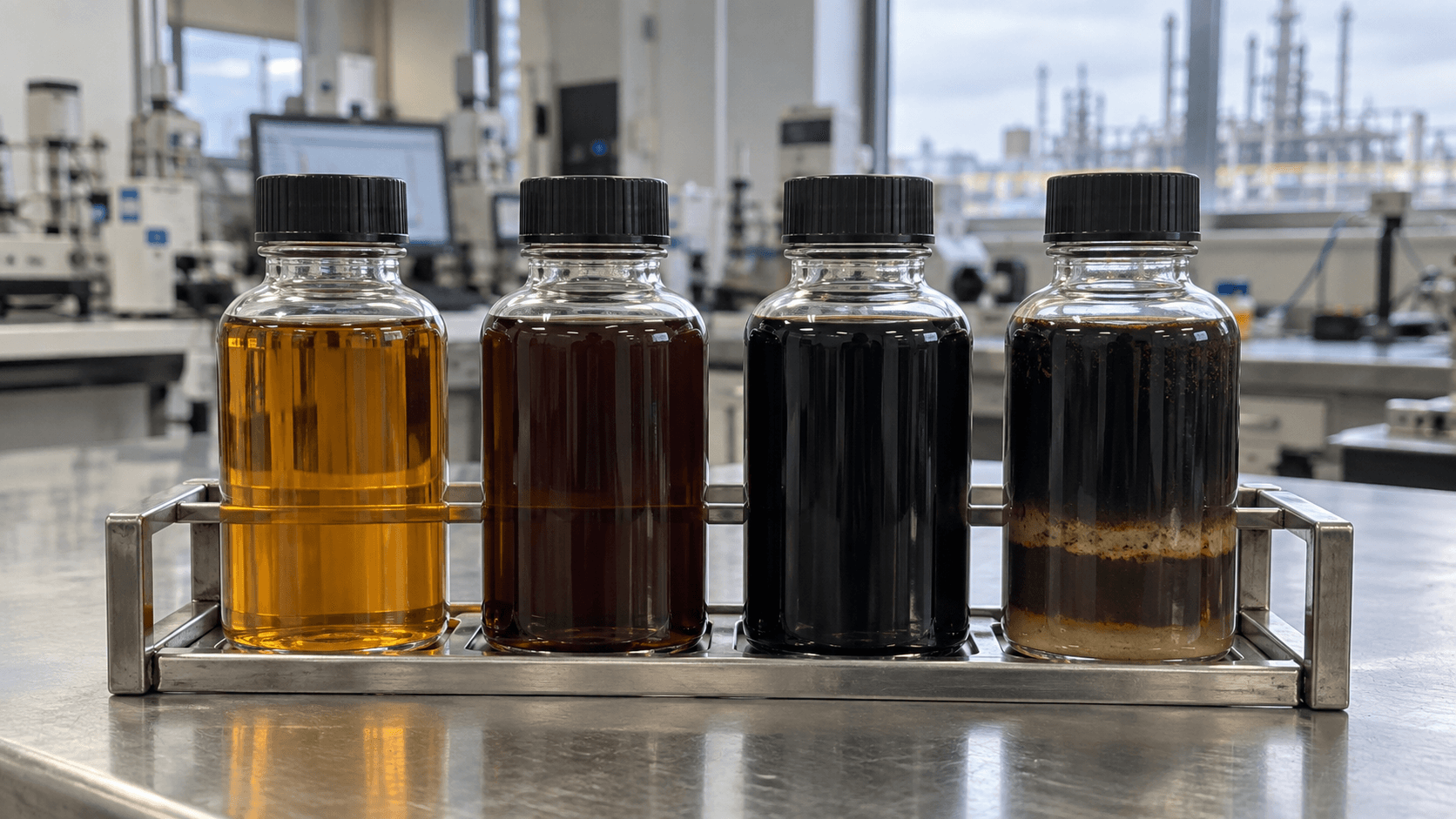
Demulsifier Troubleshooting: Slow Water Drop, Rag Layers, Dirty Water and High BS&W

Demulsification · Troubleshooting Guide
Demulsifier Troubleshooting: Slow Water Drop, Rag Layers, Dirty Water and High BS&W
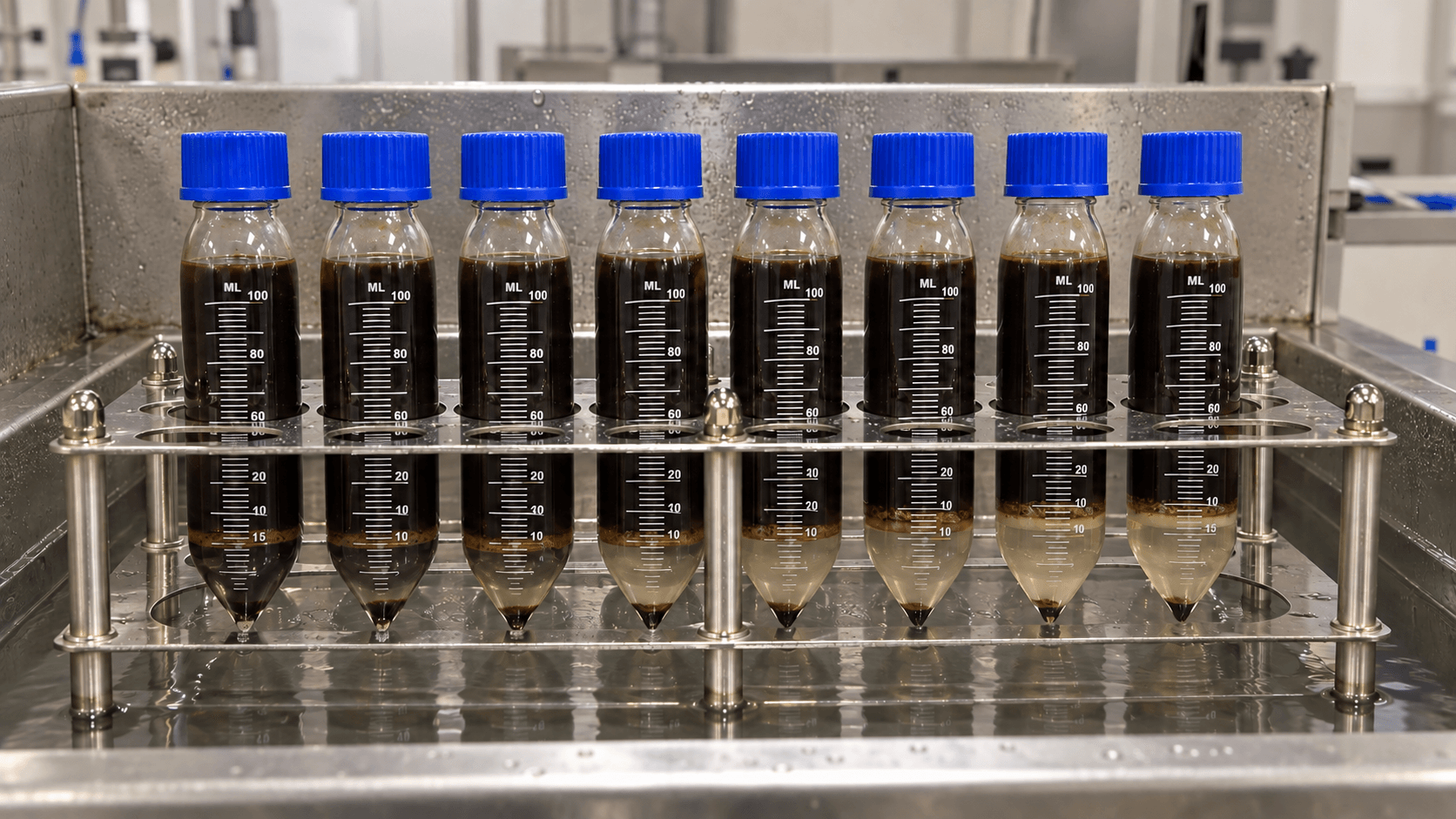
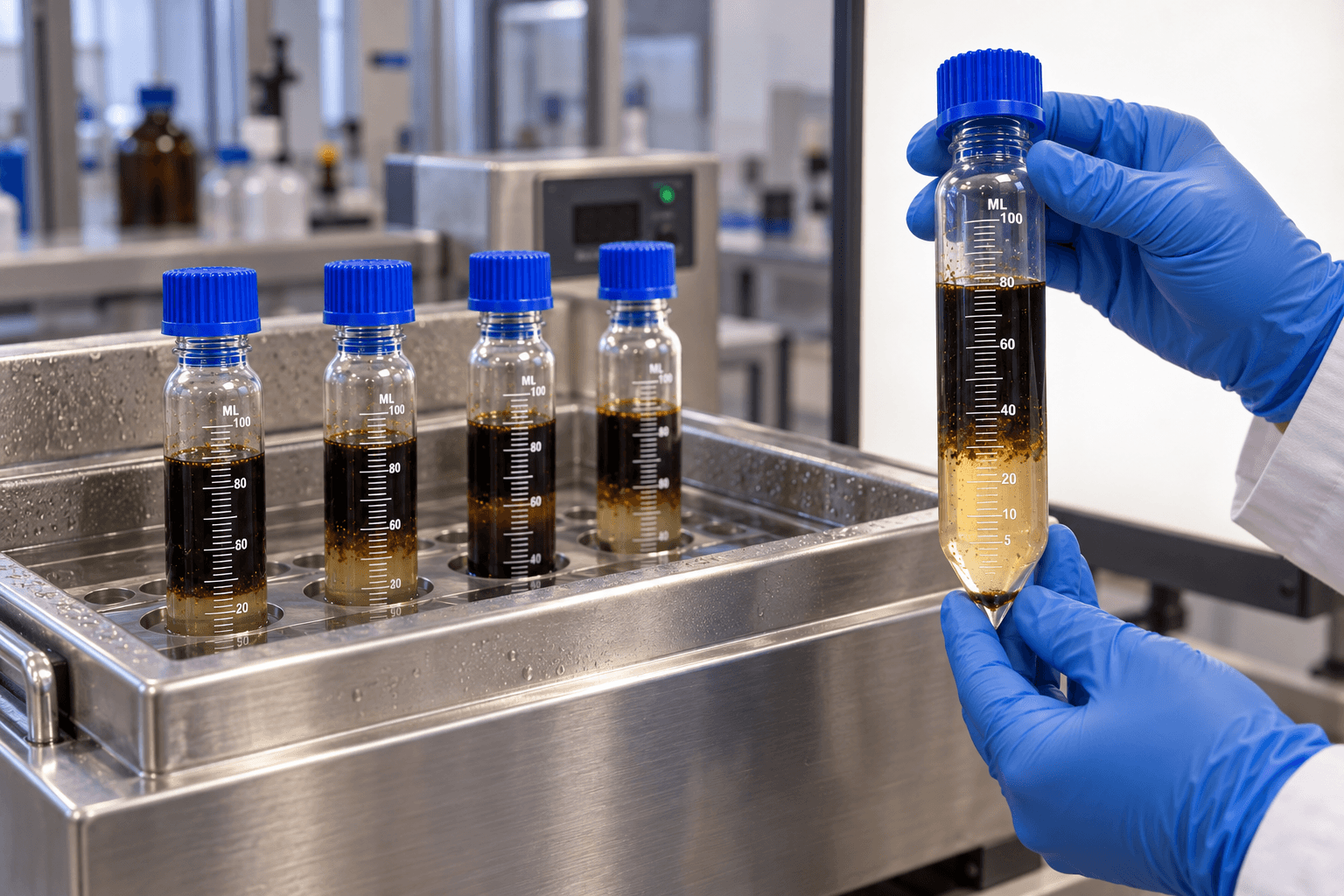
Technician inspecting crude oil and water separation during a demulsifier bottle test in a thermostatic water bath

Demulsifier problems are rarely solved by changing the product on the basis of one bottle or one laboratory reading. Slow water separation, a persistent rag layer, dirty separated water and high residual BS&W can arise from chemistry, dosage, sample history, injection quality, process conditions or measurement error. A structured diagnosis should identify which part of the treatment system has changed before a new product is selected.

This guide presents a practical troubleshooting sequence for crude-oil dehydration and desalting service. It is intended to support technical screening and field investigation; it does not replace site-specific process review, safety procedures or a controlled field trial.

1. Define the failure precisely

“The demulsifier is not working” is not a diagnostic statement. Begin by identifying the measurable symptom, its location and the time at which it appears.

Observed symptomWhat it may indicateFirst checks
Little or no early water dropSlow chemical transport, strong interfacial film, low temperature, insufficient dose or poor mixingSample condition, temperature, dose basis, mixing and crude change
Fast water drop with a thick rag layerPartial coalescence without complete interface collapseInterface volume over time, final BS&W and dose response
Dark or oily separated waterOil carry-under, over-treatment, phase-continuity change or unsuitable chemistryOIW, water cut, dose, mixing severity and injection point
Clear water but high export BS&WWater removed upstream but fine droplets remain, insufficient residence time or sampling mismatchSampling points, vessel residence, temperature and downstream performance
Performance deteriorates after a crude changeDifferent asphaltene/resin balance, wax, solids, salinity or blend compatibilityCrude blend, SARA-related indicators, water chemistry and fresh bottle testing
Product separates in storageSolvent loss, incompatibility, low-temperature phase separation or poor homogenizationProduct appearance, storage temperature, batch history and handling procedure

2. Confirm that the comparison is valid

Before blaming chemistry, verify that the baseline and the problem period are comparable. Record crude throughput, water cut, temperature, pressure, separator levels, residence time, well lineup, wash-water conditions, other injected chemicals and equipment status. A demulsifier can appear weaker when the process load has increased or the effective residence time has fallen.

Laboratory comparisons require the same discipline. Use representative samples, identical bottle volumes, controlled temperature, a documented dose basis and consistent mixing. Sample ageing or uncontrolled re-homogenization can change the emulsion and reverse product rankings. For the full laboratory workflow, see How to Perform a Demulsifier Bottle Test.

3. Troubleshooting slow or absent water drop

A slow water drop can result from an interfacial film that remains resistant, but it can also be caused by transport and process limitations. Work through the following checks in sequence.

  • Temperature: lower temperature increases crude viscosity, slows droplet movement and may change wax behavior. Compare at the actual treating temperature.
  • Dose accuracy: verify the calibrated pump output or laboratory addition. State whether ppm refers to finished product, active material, volume/volume or mass/mass.
  • Mixing: insufficient dispersion may prevent the chemical reaching droplets; excessive shear can create smaller droplets and fresh interface.
  • Residence time: confirm that the chemical has reached the sampling point and that the observation period reflects the real process.
  • Crude composition: changes in asphaltenes, resins, waxes, fine solids or blending can change the interfacial film.
  • Water chemistry: salinity, divalent ions, pH and suspended solids can alter emulsion behavior and product response.

If the blank sample also stops separating, the problem may be a changed emulsion rather than a loss of chemical quality. Review the mechanisms in Crude Oil Types and Petroleum Emulsions before redesigning the screening range.

4. Troubleshooting a thick or persistent rag layer

A rag layer indicates that gross water separation has occurred but a concentrated emulsion remains at the interface. Do not evaluate it only at the first reading. Record rag volume, texture and whether it collapses, grows or remains stable with time.

Common contributors include a chemistry that promotes partial coalescence but does not sufficiently disrupt the native film, excessive or unsuitable mixing, high solids loading, interaction with corrosion inhibitors or other production chemicals, and a dose outside the useful operating window. A dose-response series is essential: both under-treatment and over-treatment can produce an unsatisfactory interface.

5. Troubleshooting dirty or oily separated water

A large water drop is not automatically a successful result. Dark, hazy or oily separated water may indicate oil carry-under, very fine oil droplets in the water phase, or a change in phase continuity. Visual appearance should be supported by a validated oil-in-water measurement whenever water quality is a process or discharge KPI.

Check whether the candidate is too hydrophilic for the system, whether dosage is excessive, and whether the mixing or injection location is transferring oil into the water phase. Also check for phase inversion at high water cut. A product that improves oil dehydration while damaging produced-water quality is not a complete technical solution.

6. Troubleshooting high final BS&W despite visible separation

Visible free water at the bottom of a bottle or vessel does not prove that the treated oil meets specification. Fine droplets can remain suspended, particularly when viscosity is high or residence time is short. Verify final water or BS&W using the same validated analytical method for the baseline and candidate.

Check the sampling location and timing. A sample collected before the new chemistry has displaced the previous product, or before the process has stabilized, can produce a misleading result. In multi-vessel systems, determine whether water removal has shifted upstream or downstream rather than relying only on the final outlet. The structured approach is described in How to Conduct a Demulsifier Field Trial.

7. Check for underdose, overdose and a narrow operating window

Demulsifier response is not always linear. Increasing dosage can improve performance, reach a plateau or worsen interface and water quality. Test a range that brackets the current field dose and include the incumbent product and an untreated blank.

When converting pump rate to field dosage, use actual measured chemical delivery and the defined crude-flow basis. The Demulsifier Dosage Calculator converts crude flow and chemical rate to volumetric ppm and can also calculate the required L/day for a target dosage.

8. Inspect the chemical before changing the formulation

Check the product for phase separation, sediment, precipitation, unexpected viscosity, colour change or solvent loss. Confirm the batch, storage temperature and container condition. If the product is a multicomponent blend, low-temperature storage or solvent imbalance can change homogeneity and delivered composition.

Do not apply uncontrolled heating or aggressive mixing without a suitable handling procedure. First determine whether the observed separation is reversible and whether a representative sample can be obtained. Product-integrity problems should be investigated separately from crude-response problems.

9. Use a disciplined diagnostic sequence

  1. Define the failed KPI and sampling point.
  2. Confirm the analytical method and repeat the measurement.
  3. Review crude, water and process changes.
  4. Verify actual dose, dose basis and chemical delivery.
  5. Inspect product condition and batch history.
  6. Run a controlled blank, incumbent and candidate bottle-test series.
  7. Assess water drop, interface, water quality and final oil quality together.
  8. Repeat the most important comparison to check reproducibility.
  9. Only then decide whether the issue requires dosage optimization, application correction or formulation change.

10. Minimum data for a technical review

  • Crude source or blend and recent changes
  • API gravity, viscosity and relevant compositional information where available
  • Water cut, salinity and produced-water observations
  • Treating temperature, pressure and residence time
  • Current product, dosage basis and verified injection rate
  • Bottle-test protocol and timed results
  • Interface/rag observations and separated-water quality
  • Final oil BS&W or water content
  • Process configuration, injection point and sampling locations
  • Recent operating or chemical-program changes

When is reformulation justified?

Reformulation is justified when the problem remains reproducible after sample handling, dose accuracy, temperature, mixing, residence time and product integrity have been checked. The objective should be specific: faster early water removal, a sharper interface, lower final BS&W, cleaner water, improved salt removal or broader robustness to crude variation.

Commercial demulsifiers are commonly blends because one component may improve transport while another targets interface displacement or coalescence. A useful review therefore considers molecular architecture and blend balance rather than relying on a single hydrophilic-lipophilic descriptor. See Demulsifier Base Chemistries for a deeper technical discussion.

Frequently asked questions

Does faster water drop always mean a better demulsifier?

No. Early water drop must be assessed together with final oil quality, interface/rag, separated-water quality, dose response and repeatability.

Can too much demulsifier worsen performance?

Yes. Some systems show a limited useful dosage window, and excessive treatment can worsen interface quality or oil-in-water performance. Confirm with a controlled dose-response series.

Why can a laboratory winner fail in the field?

The laboratory may not reproduce field shear, residence-time distribution, crude blending, chemical carryover, injection quality or process variability. Bottle testing shortlists candidates; a controlled field trial qualifies them.

What should be checked first when performance suddenly falls?

Confirm the measurement, crude and water-cut changes, temperature, actual chemical delivery, injection point, product condition and process residence time before changing formulation.


Technical review: Horizons Apex supports structured demulsifier troubleshooting, bottle-test design, formulation review and field-trial planning. To begin a focused review, share the operating conditions, current dosage, sample history and the specific KPI that has deteriorated through our technical contact form.
How to Conduct a Demulsifier Field Trial: A Practical Method for Performance Evaluation

Demulsification · Field Evaluation

How to Conduct a Demulsifier Field Trial: A Practical Method for Performance Evaluation
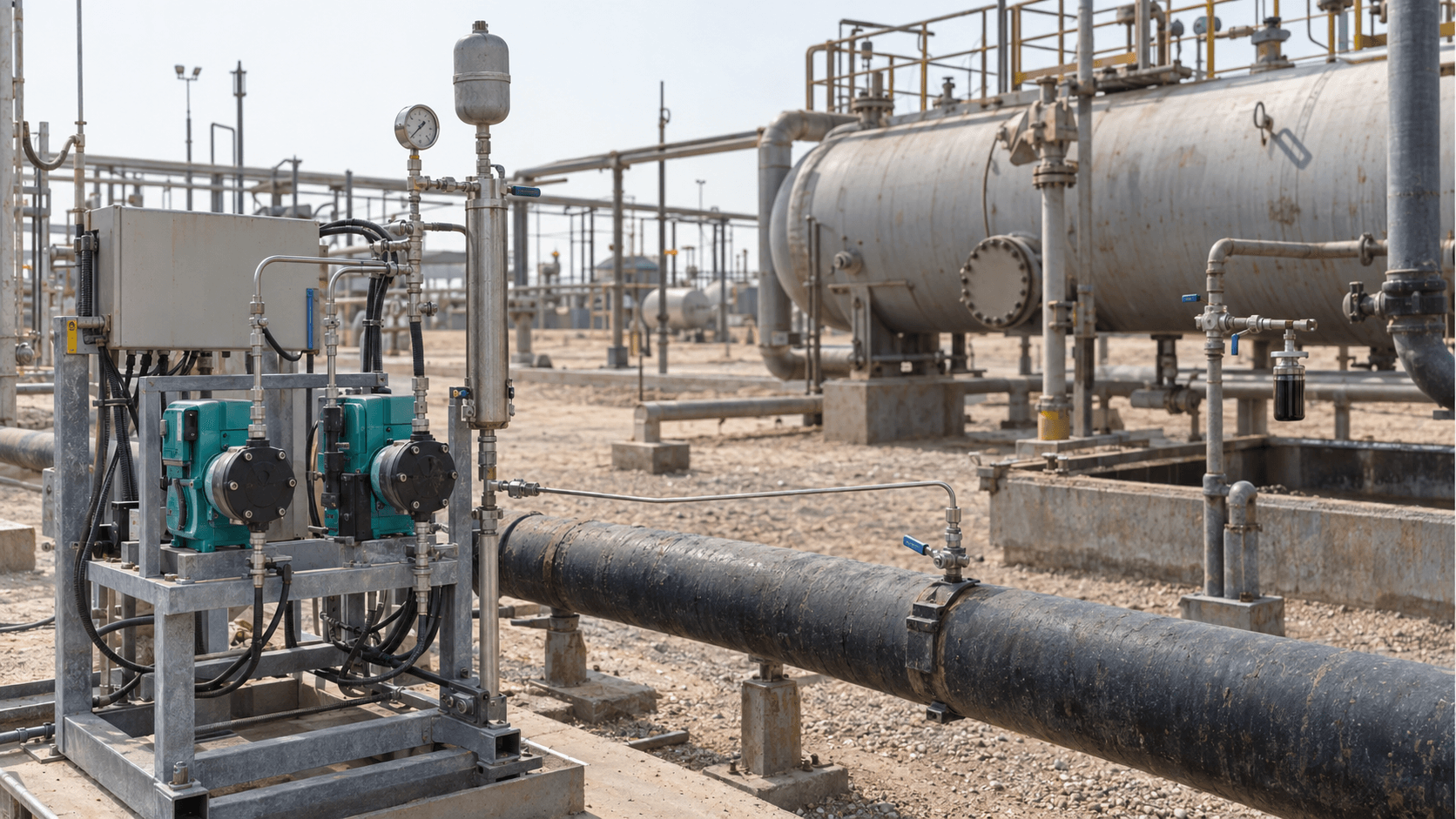
Demulsifier field trial chemical injection skid at a crude-oil separation facility

A demulsifier field trial is not simply “change the chemical and watch BS&W.” A defensible trial must separate chemical performance from changes in crude, water cut, temperature, throughput, residence time, equipment operation and measurement error. The objective is to determine whether a candidate can meet the facility’s oil, water and interface requirements over a practical dosage window without creating a new operating problem.

1. Start with a written trial objective

Define the specific process target before changing chemical. Examples include increasing early water removal before a dehydrator, lowering export BS&W, improving desalter salt removal, reducing rag, improving produced-water quality or reducing chemical consumption while maintaining specifications.

The KPI set must match that objective. A trial designed to improve first-stage water draw-off should not be judged only by final export BS&W.

2. Map the treatment and sampling system

Before the trial, document the chemical injection point, production headers, separators, heater-treaters, dehydrators/desalters, water draw-off points, oil sampling points and produced-water sampling points. Identify where each KPI is measured and what residence time lies between injection and measurement.

This process map prevents a common error: attributing a sample to the new demulsifier before the candidate has actually reached and displaced the previous chemistry at that location.

3. Establish a reliable incumbent baseline

Collect baseline data under the incumbent product before introducing the candidate. The baseline should represent reasonably stable operation and capture normal variability rather than one favorable snapshot.

  • Actual demulsifier injection rate and calculated dosage
  • Wet-crude and/or oil flow rate
  • Water cut and water draw-off by vessel where available
  • Temperatures and relevant pressures
  • Separator/dehydrator/desalter interface and liquid levels
  • Oil BS&W/water content at defined sampling points
  • Salt in crude where desalting is relevant
  • Produced-water oil-in-water (OIW) or validated water-quality metric
  • Rag/interface condition
  • Electrical voltage/current/load behavior for electrostatic equipment
  • Wash-water rate and mixer conditions for desalters

4. Verify the actual dosage, not only the pump set point

Field dosage errors can invalidate a comparison. Verify chemical pump calibration and, where possible, reconcile actual chemical consumption against tank level/weight or another independent measure. Confirm the wet-crude flow measurement used to calculate ppm.

On a mass basis:

Demulsifier dose (ppmw) = demulsifier mass flow / wet-crude mass flow × 106

On a volume basis, the calculation must explicitly use product and crude density if converting to a mass-based ppm. Report whether dosage is finished-product ppm or active-equivalent ppm. For the laboratory basis behind candidate selection and ppm definition, see How to Perform a Demulsifier Bottle Test.

For quick verification of volumetric field dosage or required injection rate, use the Demulsifier Dosage Calculator.

5. Check candidate product integrity

Before field injection, inspect the candidate for phase separation, sediment, precipitation, unexpected viscosity or solvent loss. Homogenize only according to an appropriate product-handling procedure. A non-homogeneous chemical can produce an apparent dosage-performance problem that is actually a storage/sample-quality problem.

6. Control confounding variables

Try to keep major process variables as stable as practical during comparative periods. Crude and emulsion behavior can change materially with composition, water chemistry, solids, shear and ageing; see Crude Oil Types and Petroleum Emulsions for the underlying mechanisms. At minimum, record changes in:

  • Well lineup and crude blend
  • Oil and water production rates
  • Water cut
  • Temperature
  • Pressure and separator operating levels
  • Wash-water rate and quality
  • Desalter mixer/valve pressure drop
  • Other production-chemical rates
  • Equipment configuration or maintenance condition

If a major variable changes, do not hide it by averaging the data into the trial result. Mark the affected interval and decide whether it remains comparable.

7. Understand residence-time distribution and chemical carryover

A production vessel does not normally behave like an ideal plug-flow pipe. It can contain short-circuiting paths and long residence-time tails. After a dosage change, residual demulsifier from the previous condition can remain in the process and influence downstream performance.

Published Saudi Aramco field work demonstrated a significant accumulation effect when demulsifier dosage was decreased: water draw-off responded slowly because residual chemical remained in the separation system. The authors found that increasing dosage stepwise produced more interpretable optimization data than decreasing from high dosage.

8. Do not assume one fixed stabilization time

The correct hold time after a chemical or dosage change depends on injection-to-sampling travel time, vessel residence-time distribution, recirculation, tank inventory and process dynamics. One hour, one shift or one day cannot be prescribed universally.

Use process response to identify a stable evaluation window. In the published Aramco study, dosage steps were held on the order of a day, and the authors noted that some declining-dose responses could require two or more days to fully stabilize because of accumulation. That is evidence from one facility, not a universal rule.

9. Introduce the candidate conservatively

The initial candidate dose should be selected from laboratory screening, incumbent experience and process risk. A temporary backup strategy may be appropriate in critical service, but any simultaneous incumbent injection must be documented because it changes interpretation.

Do not make large uncontrolled changes in chemical rate while also changing temperature, interface level or wash water.

10. Optimize dosage with controlled steps

Once the candidate is established, evaluate multiple dosage levels. Stepwise increases are often easier to interpret than starting high and stepping downward because residual accumulated chemical can make a lower dose appear stronger than it really is.

The step size should reflect the facility and expected dose-response; a fixed 10-ppm step is not universal. The objective is to identify the practical performance plateau and the minimum robust dose that meets the defined KPIs.

11. Measure water separation by vessel where possible

When flowmeters are reliable, water draw-off from individual separation vessels provides valuable information about where the candidate is acting. A demulsifier may not change final dehydration dramatically but may shift water removal upstream, reducing downstream load.

A useful fraction for a vessel can be expressed relative to total measured separated water, provided the relevant flows are measured consistently and the water balance is credible.

12. Close mass balances

Process data should be checked for physical consistency. Compare incoming wet-crude/water estimates with measured oil and water outlets where instrumentation allows. Large unexplained imbalances can indicate meter error, changing inventory or unsuitable averaging windows.

Field-trial literature specifically emphasizes checking process data and mass balances and correcting errors in demulsifier dosage, flow rate and temperature before interpreting product performance.

13. Oil-side KPIs

Oil quality should be evaluated at the points relevant to the facility:

  • BS&W or water content
  • Salt content for desalting service
  • Stability of specification over time
  • Water content entering downstream dehydrators/desalters
  • Any evidence of persistent rag or entrainment

Use the same validated analytical method and sampling procedure for baseline and candidate periods.

14. Water-side KPIs

A demulsifier can improve oil dehydration while worsening produced-water quality. Monitor OIW or the facility’s validated water-quality metric at appropriate stages. Visual clarity alone is useful operational information but should not replace quantitative OIW when a numerical specification exists.

15. Interface and rag KPIs

Record interface level, rag thickness/appearance, sludge accumulation and level-control stability. A candidate that gives low BS&W but builds a growing rag layer can create delayed operational problems that a short trial misses.

16. Electrostatic-unit KPIs

For electrostatic dehydrators/desalters, monitor electrical behavior together with separation quality. Relevant signals may include voltage, current/load, trips, arcing/short-circuit events or other equipment-specific stability indicators. The significance of these KPIs depends on the separation hardware; see Crude Oil Dehydration and Desalting Systems for the differences between gravity, coalescer, heater-treater and electrostatic facilities.

Do not attribute every electrical event to chemistry; water level, conductivity, solids, electrodes, power equipment and control faults must also be considered.

17. Desalter-specific KPIs

For crude desalting, evaluate salt removal together with outlet BS&W, wash-water rate/quality, mixing conditions, effluent-water quality, interface/rag and electrical stability. A candidate should not be declared superior from dehydration alone if salt removal deteriorates.

18. Build a structured field-trial sheet

KPI Incumbent baseline Candidate dose 1 Dose 2 Dose 3 Validation
Actual dose
Throughput
Water cut
Temperature
Water draw-off
Final BS&W
Salt
OIW
Rag/interface
Electrical behavior

19. Compare stable windows, not isolated samples

Single grab samples are vulnerable to sampling and process variability. Define stable windows after each change and compare distributions or averages together with variability. Retain the raw time series so transient upsets are not hidden.

20. Use repeat/confirmation periods

If the candidate appears better at an optimized dose, confirm the result under another comparable operating period. Where operationally safe and justified, an A–B–A or incumbent/candidate/incumbent comparison can help distinguish a chemical effect from a coincident process trend.

Such crossover testing is not always practical in continuous production, so the decision must consider process risk and chemical carryover.

21. Define stop and recovery criteria before the trial

Agree in advance what constitutes an unacceptable upset: for example export BS&W outside specification, excessive rag, produced-water deterioration, unstable electrostatic operation or another facility-specific limit. Define who has authority to stop the trial and how the incumbent or recovery dose will be restored.

22. Evaluate economics only after technical qualification

Calculate chemical cost on a consistent treated-volume basis:

Chemical cost per treated barrel = chemical consumption × delivered chemical price / treated crude volume

But do not optimize cost by ppm alone. A lower-dose product that increases downstream water load, salt, OIW, rag or operating instability may be more expensive overall.

23. Common field-trial mistakes

  • Changing candidate, dose and operating conditions simultaneously
  • Using pump set point instead of verified chemical consumption
  • Sampling before the candidate reaches the measurement point
  • Stepping rapidly from high to low dose and ignoring residual accumulation
  • Judging only export BS&W
  • Ignoring produced-water quality
  • Ignoring vessel-by-vessel water removal
  • Comparing data from materially different crude blends or water cuts without qualification
  • Using one grab sample as proof of superiority

24. Recommended trial sequence

  1. Laboratory shortlist: select credible candidates with representative bottle testing.
  2. Process mapping: establish injection, residence and sampling relationships.
  3. Baseline: characterize incumbent performance and variability.
  4. Candidate introduction: introduce at a justified conservative dose.
  5. Stabilization: wait for a defensible process-response window.
  6. Dose optimization: use controlled steps while monitoring all KPIs.
  7. Confirmation: repeat the preferred condition under comparable operation.
  8. Technical review: check oil, water, interface and equipment behavior.
  9. Economic review: compare total chemical and operational value.
  10. Final decision: define the operating dosage window and monitoring plan.

25. What a successful field trial should prove

A successful trial should demonstrate not merely that the candidate can produce a good sample, but that it can maintain the required separation under representative operating variability at a practical dosage. The result should be supported by reconciled process data and by oil-side, water-side and equipment KPIs.

Frequently asked questions

Should a field trial start at the incumbent ppm?

Not automatically. The starting dose should reflect laboratory performance, product concentration/basis and process risk. If products have different active concentrations or formulation architectures, equal finished-product ppm may not represent an equivalent chemical challenge.

How long should each dosage step be held?

There is no universal duration. Hold long enough for chemical travel, vessel residence-time distribution and the monitored KPIs to reach a defensible stable response. Published field work has used daily steps, but facility dynamics can require shorter or longer periods.

Should dosage be increased or decreased during optimization?

Stepwise increases can reduce the risk of falsely attributing residual accumulated chemical to a lower dosage. Published Saudi Aramco work specifically observed this carryover effect when stepping downward.

Is lower BS&W enough to select a winner?

No. Water draw-off, salt where relevant, produced-water OIW, interface/rag, process stability, electrical behavior and economics should also be considered.

Conclusion

Demulsifier field evaluation is a controlled process experiment. The quality of the conclusion depends as much on baseline definition, flow measurement, residence-time understanding, dosage verification and process stability as on the chemistry itself.

The most reliable approach connects laboratory screening to a structured field protocol: establish the incumbent baseline, introduce the candidate carefully, allow the process to respond, optimize dose in controlled steps, close mass balances, monitor oil and water quality together, confirm the preferred condition and only then compare economics.

Technical references

  • Raynel, G.; Marques, D. S.; Al-Khabaz, S.; Al-Thabet, M.; Oshinowo, L. A new method to select demulsifiers and optimize dosage at wet crude oil separation facilities. Oil & Gas Science and Technology – Rev. IFP Energies nouvelles 2021, 76, 19. DOI: 10.2516/ogst/2020096.
  • Kokal, S. L. Crude-Oil Emulsions: A State-of-the-Art Review. SPE Production & Facilities 2005, 20, 5–13. DOI: 10.2118/77497-PA.

Related Horizons Apex resources: Demulsifier Bottle Test Method, Crude Oil Dehydration and Desalting Systems, Crude Oil Types and Petroleum Emulsions, and Demulsifier Base Chemistries.

Crude Oil Dehydration and Desalting Systems: Gravity, Coalescers, Heater-Treaters and Electrostatic Separation

Demulsification · Process Systems

Crude Oil Dehydration and Desalting Systems: Gravity, Coalescers, Heater-Treaters and Electrostatic Separation
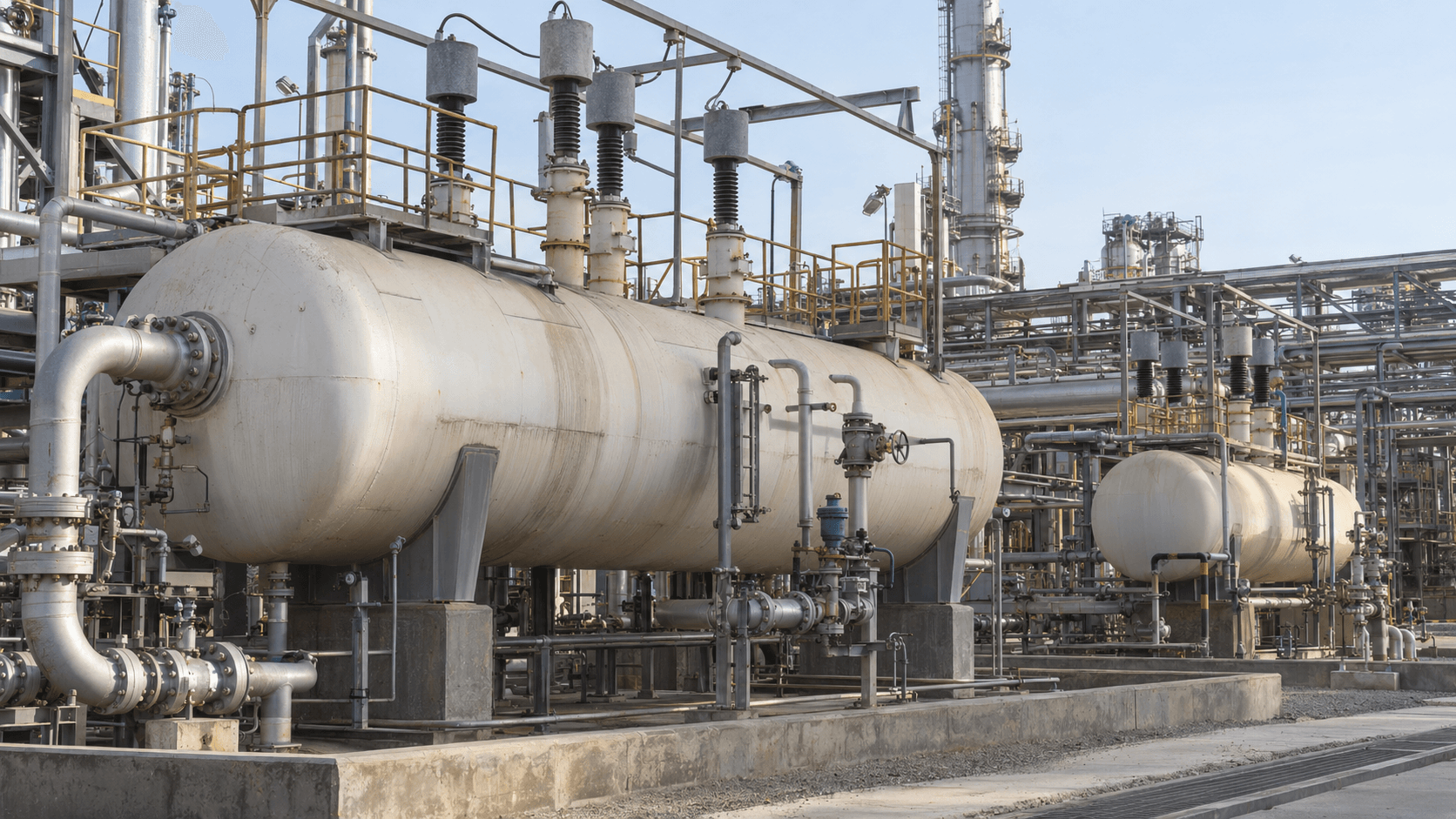
Two-stage electrostatic crude-oil dehydration and desalting system at a refinery

Crude-oil dehydration and desalting facilities differ fundamentally in how they create droplet contact, coalescence and phase separation. Some systems rely mainly on gravity and long residence time; others add heat, coalescing internals or high-voltage electrostatic fields. Modern facilities often combine several mechanisms. Because the separation environment changes, the demulsifier that performs best in one system may not be optimal in another.

1. Dehydration and desalting are related but different

Produced crude can contain free water, dispersed/emulsified water and dissolved salts carried in the aqueous phase. Dehydration primarily reduces water content. Desalting adds wash-water contact so water-soluble salts can transfer into a new aqueous phase that is subsequently separated. A dehydrator can therefore produce low BS&W while salt remains excessive if the residual brine is highly saline.

2. Gravity / high-residence-time systems

Large settling vessels and wash tanks rely substantially on gravity and time. Droplet settling becomes faster as droplets grow and slower as continuous-phase viscosity increases. Real crude emulsions are more complex than ideal Stokes settling, but this explains why small droplets and viscous crude challenge gravity systems.

Strengths: simplicity and long separation time. Limitations: large inventory/footprint, slow response and limited ability to overcome very stable fine emulsions without chemical or thermal assistance.

3. Demulsifier behavior in long-residence systems

With more residence time, sustained coalescence, final dehydration and interface cleanup may matter more than the first few minutes of water drop. The correct kinetic target should reflect actual throughput and residence time rather than an arbitrary bottle-test endpoint.

4. Coalescer-based systems

Coalescers intentionally increase droplet contact and merger using engineered internals or media. Once small water droplets combine into larger droplets, gravitational separation becomes easier. This is different from simply providing a larger empty settling volume.

Performance depends on droplet size, viscosity, wettability, interfacial film strength, solids and flow distribution. Fine solids, wax or sludge can foul media, and incorrect wetting can reduce efficiency. Demulsifier compatibility with the coalescing surface therefore matters.

5. Heater-treaters

Heating generally reduces crude viscosity and can accelerate droplet movement, film drainage and coalescence. Heater-treaters combine thermal assistance with residence time, gravity and usually chemical treatment. Energy demand, vapor handling, fouling, scaling, corrosion and crude-quality constraints limit the usable temperature window.

Temperature also changes wax state and demulsifier solubility, diffusion and partitioning. A formulation can therefore rank differently when treating temperature changes.

6. Electrostatic dehydration

Electrostatic treaters apply a high-voltage field to a water-in-oil dispersion. The field can polarize droplets and generate electrostatic interactions that increase droplet approach and collision; successful separation still requires liquid-film drainage and rupture before true coalescence occurs. Larger coalesced droplets then separate more readily by gravity.

Electrostatic treatment does not remove the need for appropriate interfacial chemistry. If the native asphaltene/resin/solid film remains too resistant, collisions may not lead to efficient coalescence. Chemical and electrostatic mechanisms are therefore commonly complementary.

7. AC, DC and combined field concepts

Industrial electrostatic separators use different electrical configurations. AC fields are historically the most widely used in petroleum electrocoalescence, while pulsed-DC and combined/dual-polarity concepts are also used in research and commercial designs. It is not defensible to call one waveform universally superior: electrode geometry and insulation, field strength/frequency, crude electrical properties, water fraction and droplet distribution all interact, and optimum conditions are equipment- and fluid-specific.

8. Electrical stability

High water levels, conductive pathways or droplet chains, unstable rag, solids and unresolved emulsion can disturb electrostatic operation and may contribute to high or erratic electrical load or short-circuit/arcing risk depending on electrode and power-system design. Outlet BS&W alone is therefore not a complete electrostatic-treatment KPI.

9. Electrostatic desalting

Desalting couples dilution/mass transfer with separation. Added wash water contacts the saline water already associated with the crude, diluting and redistributing water-soluble inorganic salts into the aqueous phase; that salt-bearing water must then coalesce and leave the oil. The process therefore requires both effective water contact and effective subsequent separation.

10. Mixing: too little versus too much

Insufficient mixing gives poor wash-water/brine contact and weak salt transfer. Excessive shear can create very small droplets and a large interfacial area, making downstream separation more difficult. The optimum mixing-valve pressure drop or shear is system-specific; more mixing is not automatically better desalting.

11. Single-stage desalting

A single-stage desalter performs the principal wash-water contacting and separation in one stage. It can be adequate when inlet salt, crude properties and outlet specifications allow the required removal. It has fewer equipment stages but less margin when feed or specification becomes more demanding.

12. Two-stage / multistage desalting

A second stage provides another opportunity for dilution/contact and brine removal. Wash water may be reused between stages or arranged countercurrently depending on design. Two-stage systems can achieve more demanding salt removal, but add equipment, controls and operating complexity.

13. Hybrid systems

Many real facilities combine chemical demulsifier, heat, controlled mixing, residence time and electrostatic coalescence. Upstream free-water removal or engineered coalescing internals may also be present. A facility is therefore best understood by its dominant mechanisms and operating envelope rather than by one equipment label.

14. Upstream free-water removal

Where bulk free water is high, removing it upstream can reduce the hydraulic, thermal and electrical load on downstream fine dehydration/desalting. However, upstream shear, chemical injection and interface control affect the droplet population entering the next vessel, so the whole separation train should be evaluated together.

15. Comparison of system types

System Dominant mechanism Strength Main limitation Demulsifier focus
Gravity / high residence Settling + coalescence Simple, long time Large volume; fine droplets Final dehydration, clean interface
Coalescer Droplet contact on internals Compact enhanced coalescence Fouling/wettability Film weakening + media compatibility
Heater-treater Heat + gravity + time Lower viscosity Energy/fouling Performance at treating temperature
Electrostatic dehydrator Electric-field coalescence Fine water removal Electrical/interface sensitivity Rapid clean coalescence
Electrostatic desalter Wash-water contact + field Water + salt reduction Mixing/separation trade-off Salt, BS&W, water quality, electrical stability
Two-stage desalter Repeated contact/separation Higher salt-removal capability Complexity Robust performance across stages

16. Why bottle-test ranking can change by facility

A gravity bottle test evaluates chemical-assisted coalescence and settling under defined temperature and mixing. It does not reproduce a high-voltage field, engineered coalescer media, continuous wash-water mixing or full-scale hydraulics. A bottle-test winner in a long-residence tank is therefore not automatically the optimum product for a short-residence electrostatic unit.

17. Demulsifier priorities by system

High residence time: final dehydration, low residual BS&W and clean interface.

Coalescer: rapid film weakening plus compatibility with internals and solids.

Heater-treater: partitioning and performance at actual temperature.

Electrostatic dehydration: rapid coalescence, interface stability and electrical operability.

Desalting: salt removal together with BS&W, wash-water quality, rag behavior and electrical stability.

18. High outlet BS&W

Possible causes include unsuitable dose/chemistry, low temperature, reduced residence time, excessive upstream shear, changed crude/water cut/solids, poor level control, hydraulic maldistribution, or electrostatic/coalescer malfunction.

19. High salt despite acceptable BS&W

Low water content does not guarantee low salt. A small residual volume of highly saline brine can still produce unacceptable salt. Poor wash-water contact, insufficient wash-water quality/rate, high inlet salinity or weak stage efficiency should be investigated.

20. Thick rag layer

Rag can contain partially coalesced water, oil, asphaltenic material, solids and treatment chemicals. Crude changes, solids, temperature, interface level, mixing and chemical dose/partitioning should be investigated. Simply increasing demulsifier dose can sometimes worsen the interface.

21. Dirty effluent water

Oil-rich water can indicate excessive dispersion, poor coalescence, unfavorable chemical partitioning, interface disturbance or hydraulic carry-under. Water quality should be part of demulsifier selection rather than an afterthought.

22. Electrical instability

High or erratic electrical load should be investigated against water level, rag/emulsion condition, conductivity, solids, electrodes and electrical controls. Chemical adjustment can help when unresolved emulsion is the cause, but electrical/mechanical faults should not be treated as chemistry problems.

23. Troubleshooting matrix

Symptom Process variables Chemical questions
High BS&W Temperature, residence, shear, level Dose, chemistry, injection/distribution
High salt Wash water, mixing, inlet salinity, stages Does treatment allow clean brine coalescence?
Thick rag Solids, crude blend, temperature, level Overdose? partitioning? film disruption?
Dirty water Mixing, hydraulics, interface Is chemistry transferring/stabilizing oil in water?
Electrical instability Water level, conductivity, rag, electrodes Is unresolved emulsion contributing?

24. Facility-specific evaluation workflow

  1. Map the separation train and dominant mechanism at each vessel.
  2. Record crude, inlet BS&W/salt, water cut, temperature and throughput.
  3. Identify effective residence time and upstream shear points.
  4. For desalters, document wash-water quality/rate and mixer conditions.
  5. For electrostatic units, review electrical behavior with interface condition.
  6. Design bottle testing around representative temperature, phase ratio and mixing.
  7. Evaluate water drop, interface, final BS&W and water quality; for desalting also measure salt removal.
  8. Validate shortlisted candidates through controlled field dosage steps.

Frequently asked questions

Is electrostatic treatment always better than long residence time?

No. Equipment choice depends on throughput, crude properties, specification, footprint, utilities and operating requirements.

Does electrostatic dehydration eliminate demulsifier?

Not generally. A strong natural interfacial film can prevent coalescence even when droplets collide in an electric field.

Can a conventional bottle test fully predict desalter performance?

No. It does not reproduce the electric field, continuous wash-water mixing, full-scale hydraulics or electrical stability.

Why can salt stay high when BS&W is low?

Because salt is dissolved in residual aqueous droplets. A small amount of highly saline brine can still produce unacceptable salt.

Conclusion

Crude dehydration and desalting systems form a spectrum from gravity/high-residence-time separation to engineered coalescers, heater-treaters and high-voltage electrostatic units. Modern plants frequently combine these mechanisms.

Demulsifier selection should therefore begin with the facility, not only the crude. Residence time, temperature, mixing, coalescing mechanism, electrical field, wash-water contact, interface control and outlet specifications determine what good performance means.

Technical references

  • Kokal, S. L. Crude-Oil Emulsions: A State-of-the-Art Review. SPE Production & Facilities 2005, 20, 5–13. DOI: 10.2118/77497-PA.
  • Kilpatrick, P. K. Water-in-Crude Oil Emulsion Stabilization: Review and Unanswered Questions. Energy & Fuels 2012, 26, 4017–4026. DOI: 10.1021/ef3003262.
  • Speight, J. G. The Chemistry and Technology of Petroleum. CRC Press.

Related Horizons Apex resources: Crude Oil Types and Petroleum Emulsions, Demulsifier Base Chemistries, and Demulsifier Bottle Test Method.

Crude Oil Types and Petroleum Emulsions: Why Crude Composition Controls Demulsification

Demulsification · Technical Insight

Crude Oil Types and Petroleum Emulsions: Why Crude Composition Controls Demulsification
Light, medium and heavy crude-oil samples with a water-in-oil emulsion

Crude oil is not a single fluid, and petroleum emulsions are not a single type of dispersion. Two crudes with similar API gravity can show very different emulsion stability because their asphaltenes, resins, waxes, acids, fine solids and production histories differ. Understanding crude composition and emulsion type is therefore fundamental to demulsifier selection.

1. How crude oils are classified

Crude oils are commonly described by density/API gravity, sulfur content and compositional character. These classifications are useful, but none alone predicts emulsion behavior.

2. API gravity: light, medium, heavy and extra-heavy crude

API gravity expresses crude density relative to water:

API gravity = (141.5 / specific gravity at 60 °F) − 131.5

API-gravity labels are conventions and the cutoffs vary by organization and market. One widely used petroleum-industry convention places light crude above about 31.1° API, medium around 22.3–31.1°, heavy below about 22.3°, and extra-heavy around or below 10° API. These ranges are descriptive categories, not universal physical transitions, so the classification source should be stated when the boundary matters.

Lower-API crude is often more viscous and can contain larger heavy-fraction concentrations, but API gravity alone does not determine whether a produced emulsion will be difficult to break.

3. Sweet and sour crude

Sweet/sour terminology primarily reflects sulfur content. Sour crude contains more sulfur compounds and generally requires greater sulfur-management effort during refining. Sulfur classification is important commercially and operationally but is not a direct measure of emulsion stability.

A sour crude can form an easy or difficult emulsion, just as a sweet crude can. For demulsification, interfacial-active components and production conditions are usually more directly relevant.

4. Paraffinic, naphthenic and aromatic character

Crudes are also described according to hydrocarbon character. Paraffinic crudes contain relatively more normal and branched alkanes and may have significant wax behavior. Naphthenic crudes contain more cycloalkanes, while aromatic-rich fractions contain more aromatic structures.

Real crude oils are complex mixtures rather than pure members of these categories. Their solvency environment influences whether asphaltenes remain well dispersed or approach conditions favorable for aggregation and interfacial accumulation.

5. SARA: a more useful compositional framework for emulsion science

SARA fractionation divides petroleum into Saturates, Aromatics, Resins and Asphaltenes. For emulsion behavior, the balance among these fractions can be more informative than density alone.

  • Saturates: largely non-polar hydrocarbons, including paraffinic components.
  • Aromatics: aromatic hydrocarbons with stronger solvency for heavy polar fractions than saturates.
  • Resins: polar, aromatic-rich molecules that interact with asphaltenes and interfaces.
  • Asphaltenes: operationally defined as the fraction insoluble in low-molecular-weight n-alkanes such as n-heptane but soluble in aromatic solvents such as toluene under the specified test definition.

Asphaltenes are not one unique molecule or molecular-weight class; they are a solubility-defined complex fraction.

6. Why asphaltenes are central to many crude-oil emulsions

Asphaltenes can adsorb at the oil–water interface and contribute to mechanically resistant, viscoelastic interfacial films. Their aggregation state and interfacial behavior depend on crude solvency, concentration, aromaticity and interactions with resins and other polar species.

However, “more asphaltene means more stable emulsion” is too simple. Reviews and model-oil studies show that stability depends strongly on asphaltene solvency/aggregation state, interfacial coverage and the surrounding oil composition; maximum stability can occur near conditions where asphaltenes approach incipient precipitation rather than at the highest bulk asphaltene concentration.

7. The role of resins

Resins can associate with asphaltenes, alter their solvency/dispersion in the oil phase and also participate at oil–water interfaces. Their effect is not unidirectional: depending on crude composition and concentration, resins may modify or weaken asphaltene-driven stabilization by keeping asphaltenes better solvated, while in other systems mixed interfacial films can contribute to stability.

Simple resin-to-asphaltene ratios are therefore useful descriptors in some model studies but should not be treated as universal predictors of bottle-test difficulty.

8. Waxes and paraffinic components

Wax can influence viscosity, low-temperature flow and emulsion behavior. Below or near the wax appearance region, precipitated wax crystals can interact with droplets and other interfacial materials. In waxy crude, temperature history may therefore change emulsion behavior even when bulk composition is unchanged.

9. Fine solids

Clay, silica, iron sulfide, corrosion products and other fine solids can accumulate at oil–water interfaces when their wettability is favorable, creating Pickering-type stabilization or reinforcing an organic interfacial film. Solid-stabilized emulsions can respond differently to conventional demulsifiers.

The effect depends on particle size, concentration, surface chemistry and oil/water wettability; solids are not automatically emulsion stabilizers under every condition.

10. Water-in-oil emulsions (W/O)

In a water-in-oil emulsion, water droplets are dispersed within a continuous crude-oil phase. This is the principal emulsion type encountered in crude dehydration and is the main target of conventional crude-oil demulsifiers.

W/O stability can be promoted by asphaltenes, resins, fine solids and other surface-active components that form or reinforce the droplet interface.

11. Oil-in-water emulsions (O/W)

In an oil-in-water emulsion, oil droplets are dispersed in a continuous aqueous phase. These systems are particularly relevant to produced-water treatment and oil-in-water discharge/reinjection quality.

A chemical optimized to break W/O crude emulsion should not automatically be assumed to treat O/W produced-water emulsion effectively. Phase continuity and required interfacial behavior are different.

12. Multiple emulsions: W/O/W and O/W/O

Multiple emulsions contain droplets within droplets. In a W/O/W system, small water droplets are trapped inside oil droplets that are themselves dispersed in an external water phase. O/W/O is the inverse architecture.

Such structures can arise under complex mixing, surfactant and phase-inversion conditions. In field fluids they complicate interpretation of simple visual separation because gross phase volume does not reveal the internal droplet structure.

13. Tight, loose and metastable emulsions

Field personnel often use terms such as “tight” and “loose” emulsion. These are operational descriptions rather than rigorous universal classifications. A tight emulsion generally refers to slow coalescence and persistent rag/interfacial material, while a loose emulsion separates more readily.

For technical reporting, these descriptions should be supported by measurable endpoints such as droplet-size distribution, separation kinetics, interface/rag volume and residual BS&W.

14. Droplet size

Smaller droplets generally settle more slowly and provide greater interfacial area per unit dispersed volume. High shear can therefore make an emulsion more difficult to separate by reducing droplet size and rapidly creating fresh interface for natural surface-active species to occupy.

Droplet size is not the only variable: a small-droplet emulsion with a weak interface may still break readily after appropriate treatment, while larger droplets with a strong interfacial film can persist.

15. Water cut and phase inversion

Changing dispersed-phase fraction alters droplet crowding, collision frequency, rheology and the probability of phase inversion. As water fraction rises, a W/O system may approach inversion toward O/W, but inversion is not controlled by water cut alone; crude composition, interfacial chemistry, wettability, temperature and imposed mixing/flow conditions can all shift the inversion region.

There is no universal water-cut percentage at which every crude inverts.

16. Temperature

Increasing temperature usually lowers crude viscosity and can increase droplet mobility and collision/coalescence rates. It also changes wax state, interfacial properties and demulsifier partitioning. Temperature therefore affects both the untreated emulsion and the chemical treatment.

This is why bottle testing at an arbitrary laboratory temperature can produce a ranking that differs from field behavior.

17. Salinity and brine composition

The dispersed water is chemically active. Ionic strength and specific ions can influence interfacial charge, ionization of acidic/basic surface-active species, mineral/solid behavior and interactions within the interfacial film. Ca²⁺, Mg²⁺, Fe species and the overall brine composition can therefore change emulsion behavior even when the crude oil is unchanged.

18. pH and naturally occurring acids/bases

Crude oils can contain naphthenic acids and basic nitrogen compounds. Their ionization at the interface depends on aqueous pH. Changes in pH can alter interfacial charge and the surface activity of naturally occurring species, sometimes producing large changes in emulsion stability.

19. Emulsion ageing

A freshly generated emulsion can behave differently after hours or days. Interfacial films can reorganize and become more mechanically resistant with time. Asphaltene aggregation and solid association may also evolve.

Sample age is therefore a critical bottle-test variable. Comparing one product on fresh emulsion with another on aged emulsion is not a valid chemical comparison.

20. How crude characteristics affect demulsifier selection

Crude/system characteristic Possible emulsion consequence Demulsifier-selection implication
High viscosity Slower droplet movement and film drainage Temperature and separation kinetics become especially important
Asphaltene-rich/interfacially active crude Strong viscoelastic interfacial film may form Screen chemistries able to disrupt/reorganize the native film
Waxy crude Temperature-history-dependent viscosity and solid effects Test at representative temperature and ageing history
Fine solids present Possible Pickering/interfacial reinforcement Assess solids and interface rather than water drop alone
Very small droplets High interfacial area and slow gravity separation Mixing history and coalescence kinetics become critical
Changing brine/pH Changed interfacial chemistry Use representative produced water in screening
Changing water cut Droplet crowding and possible phase-behavior change Evaluate across realistic water-cut range

21. Why the same demulsifier can succeed in one crude and fail in another

A demulsifier must reach the interface and alter a film whose composition is determined by the crude and brine. Changing asphaltene/resin balance, aromatic solvency, solids, wax, water chemistry or droplet size changes that target.

Consequently, an EO/PO polyether, resin alkoxylate, branched polyether or blend that is well matched to one crude may have the wrong partitioning or interfacial behavior in another.

22. Crude classification is a starting point, not a demulsifier prescription

Labels such as “heavy,” “sour” or “paraffinic” help describe crude, but they should not be converted directly into a product recommendation. A technically useful screening package combines crude characterization with representative bottle testing.

At minimum, record API/density, viscosity at relevant temperature, initial water/BS&W, brine chemistry where available, sample age, operating temperature, water cut and evidence of wax or solids. SARA data can add valuable context when emulsion behavior is difficult to explain.

23. A practical diagnostic sequence

  1. Identify whether the problematic dispersion is W/O, O/W or a more complex system.
  2. Record crude density/API, viscosity and temperature.
  3. Measure water content and characterize produced-water chemistry where relevant.
  4. Review SARA/asphaltene information if available.
  5. Check for wax, solids and corrosion products.
  6. Document sample age and upstream shear/mixing history.
  7. Run a controlled bottle-test dose response using the representative emulsion.
  8. Judge water drop, interface, water quality and final oil BS&W together.
  9. Validate shortlisted chemistry under field conditions.

Frequently asked questions

Does heavy crude always form the most stable emulsion?

No. Heavy crude often has high viscosity and significant heavy polar fractions, but emulsion stability depends on interfacial composition, droplet size, solids, water chemistry, shear and ageing as well as density.

Does high asphaltene content always mean a difficult bottle test?

No. Asphaltene state, solvency, aggregation and interfacial coverage matter. Bulk concentration alone is not a universal predictor.

Are all produced crude emulsions water-in-oil?

No. W/O is common in crude dehydration, but O/W and multiple emulsions also occur, particularly in produced-water and high-water-cut systems.

Can API gravity be used to choose a demulsifier base?

Not by itself. API is useful context, but demulsifier selection requires information about interfacial-active crude components, brine, process conditions and actual bottle-test response.

Conclusion

Crude-oil emulsion behavior emerges from the interaction of bulk crude composition, interfacial-active molecules, dispersed-water chemistry, solids and process history. API gravity, sulfur classification and SARA composition each describe different parts of that system.

For demulsification, the most useful question is not simply “What type of crude is this?” but “What stabilizes this particular oil–water interface under the actual production conditions?” Answering that question connects crude characterization to demulsifier base chemistry, bottle testing and ultimately field performance.

Technical references

  • Kokal, S. L. Crude-Oil Emulsions: A State-of-the-Art Review. SPE Production & Facilities 2005, 20, 5–13. DOI: 10.2118/77497-PA.
  • Kilpatrick, P. K. Water-in-Crude Oil Emulsion Stabilization: Review and Unanswered Questions. Energy & Fuels 2012, 26, 4017–4026. DOI: 10.1021/ef3003262.
  • McLean, J. D.; Kilpatrick, P. K. Effects of Asphaltene Solvency on Stability of Water-in-Crude-Oil Emulsions. Journal of Colloid and Interface Science 1997, 189, 242–253.
  • Sjöblom, J. et al. Our current understanding of water-in-crude oil emulsions: Recent characterization techniques and high pressure performance. Advances in Colloid and Interface Science 2003, 100–102, 399–473.
  • Speight, J. G. The Chemistry and Technology of Petroleum. CRC Press.

Related Horizons Apex resources: Demulsifier Base Chemistries, Demulsifier Bottle Test Method, Selecting a Demulsifier, and Demulsifiers.

How to Perform a Demulsifier Bottle Test: A Practical Oilfield Evaluation Method

Demulsification · Laboratory Method

How to Perform a Demulsifier Bottle Test: A Practical Oilfield Evaluation Method
Demulsifier bottle test with graduated crude-oil samples showing water separation

The demulsifier bottle test is a comparative screening method, not a universal one-size-fits-all standard. Its value comes from controlling the variables that can change emulsion breaking: sample history, temperature, dosage, mixing energy, settling time and the criteria used to judge separation. A useful test should reproduce the field decision closely enough to shortlist candidates for a controlled field trial.

1. Define the purpose before starting

A bottle test may be used to compare products, optimize dosage, investigate changing crude conditions or evaluate a formulation change. The protocol should be fixed before testing so that chemistry—not inconsistent handling—drives the ranking.

2. Collect a representative crude-oil emulsion

Whenever possible, use a fresh process emulsion sampled upstream of demulsifier injection or before significant separation has occurred. Record the field, sample point, sampling time, temperature, water cut/BS&W, current treatment and relevant operating conditions.

Emulsion ageing can change interfacial-film strength and separation behavior. Sample history should therefore be controlled and reported. If the bulk sample must be redistributed into test bottles, re-homogenize it reproducibly without applying uncontrolled high shear.

3. Determine initial water content

The initial emulsified-water content provides the reference against which separated-water volume can be interpreted. Depending on the laboratory and crude, an appropriate standardized water/BS&W method should be used. ASTM D4007 covers water and sediment in crude oil by centrifuge, but the method itself notes that the observed water result is almost always lower than the actual water content; for high-accuracy water determination, ASTM D4006 (distillation) or another validated method may be more appropriate.

If the original emulsified-water volume is known, a simple water-removal efficiency can be expressed as:

Water removal (%) = Vseparated,t / Vinitial water × 100

This metric is useful but should not replace evaluation of interface, water quality and residual water in the oil.

4. Prepare identical test bottles

Use clean, identically graduated, closable glass bottles or centrifuge tubes. Published bottle-test studies commonly use 50 or 100 mL samples; 100 mL is particularly convenient because separated-water volume can be read directly and compared across candidates.

All bottles in one comparison should contain the same sample volume and should experience the same temperature and handling history.

5. Include controls and references

  • Blank: emulsion with no added demulsifier.
  • Incumbent/reference: the current field product at its relevant dosage, where available.
  • Candidates: each new product at one or more predefined dosages.
  • Replicates: duplicates or repeat runs when repeatability matters.

A candidate should not be judged only against another new product. The untreated blank shows natural separation, while the incumbent provides a practical performance benchmark.

6. Control the test temperature

Temperature changes crude viscosity, droplet mobility, wax behavior, interfacial properties and coalescence kinetics. The preferred screening temperature should therefore represent the actual treating condition unless the experiment is intentionally studying temperature sensitivity.

Published studies use many different temperatures—50 °C, 60 °C and other values—but these are experimental conditions, not universal bottle-test standards. The relevant field temperature is the defensible starting point.

7. Equilibrate the sample before dosing

Bring all test bottles to the selected temperature using a thermostatically controlled bath or other validated method. Temperature should be stable and consistent across the series before performance is compared.

8. Prepare and define the demulsifier dose correctly

The report must state what “ppm” means. It may refer to finished commercial product, neat active or a prepared stock solution. These are not interchangeable.

For a liquid product dosed on a mass basis:

Dose (ppmw) = mass of product / mass of emulsion × 106

If a diluted stock solution is used, the stock concentration and active basis must be documented. Published studies frequently prepare defined active solutions—for example 10% active in a solvent—and then dose those stocks. Other field-oriented methods dose the commercial product directly. Both approaches can be valid if the basis is explicit and consistent.

For very small additions, gravimetric dosing can improve accuracy and avoid errors caused by density, viscosity and temperature when tiny liquid volumes are measured.

For field-rate conversion between crude flow, chemical L/day and volumetric ppm, use the Demulsifier Dosage Calculator.

9. Use a dose-response series

A single concentration cannot identify an optimum. Select a dosage range that brackets the incumbent or expected field range. Published research has used ranges such as 10–50 ppm, 10–60 ppm and 25–200 ppm depending on crude and study objective; these are examples, not universal recommendations.

The objective is to determine whether performance improves, plateaus or deteriorates with increasing dosage.

10. Standardize mixing energy

After dosing, every bottle must receive the same mixing treatment. Literature methods range from controlled hand inversion to vigorous shaking or mechanical mixing for a defined time. Because mixing changes chemical distribution and droplet collisions, different protocols can change product ranking.

Do not combine data from bottles that received visibly different mixing energy. Record the method, duration, equipment and any coalescence-shake sequence used.

11. Start the settling clock consistently

Return all bottles to the controlled-temperature environment immediately after mixing and define time zero consistently. Keep the bottles undisturbed except where the protocol intentionally specifies additional mixing.

12. Record water drop versus time

Read separated water directly from the graduations at predefined intervals appropriate to the process. Published studies use schedules ranging from sub-minute observations to several hours. A practical field-oriented schedule might include early and later readings such as 5, 10, 20, 30, 60 and 120 minutes, but the actual schedule should reflect separator residence time and the objective of the test.

Plotting separated-water volume against time is more informative than recording only a final value because two products can reach the same final water volume with very different kinetics.

13. Evaluate the oil–water interface

Water drop alone is not enough. Record whether the interface is sharp and compact or contains a thick rag/emulsion layer. A fast water drop accompanied by a persistent rag layer can be operationally inferior to a slightly slower but cleaner separation.

A simple laboratory scoring system may be used, but the scale and definitions should be documented before ranking products.

14. Evaluate separated-water quality

Observe whether the separated water is clear, hazy or visibly oil-contaminated. Where discharge or reinjection quality matters, visual inspection can be supplemented by an appropriate oil-in-water measurement.

A demulsifier that transfers excessive oil into the water phase should not be ranked as a winner solely because it produces a large apparent water drop.

15. Measure residual water or BS&W in the treated oil

Final oil quality is a critical endpoint. Published demulsifier studies use centrifuge-based S&W/BS&W as well as distillation-type water determination. The analytical method should be appropriate for the crude and specification, and the same method should be used consistently across candidates. Where accurate water content is critical, the known limitations of ASTM D4007 should be considered.

This step distinguishes true dehydration from simple visible water separation.

16. Use a multidimensional ranking

Criterion What it tells you Desired behavior
Water drop vs time Separation kinetics Appropriate speed and high recovery
Final separated water Extent of gross separation Consistent with initial water content
Interface/rag Residual emulsion stability Thin, sharp, collapsing interface
Water quality Oil carryover into water Clean water for the process requirement
Final oil BS&W Actual dehydration quality Meets the target specification
Dose response Efficiency and overdose behavior Robust performance over practical range
Repeatability Confidence in ranking Similar behavior in repeat runs

17. Do not select a winner from the 10-minute water drop alone

An early water-drop reading can be useful when rapid separation is operationally important, but it is only one endpoint. A product can show excellent early water drop yet leave a dirty interface, high residual BS&W or poor separated-water quality.

The ranking should reflect the field requirement: dehydration, desalting support, water quality, residence time and stability of the separation.

18. Check repeatability

Bottle testing is sensitive to sample heterogeneity and operator technique. Duplicate tests or independent repeat runs provide evidence that an apparent winner is real. Published field-oriented research has explicitly used repeat testing and confidence criteria to validate water-separation curves.

If duplicates disagree substantially, investigate sample homogenization, dosing accuracy, temperature and mixing before drawing a formulation conclusion.

19. Be cautious with artificially prepared emulsions

Synthetic laboratory emulsions are valuable for controlled mechanistic studies, but their droplet-size distribution and interfacial history can differ from produced field emulsions. High-shear preparation methods can create emulsions much more severe than the process sample.

For field product selection, fresh representative field emulsion is preferable when available.

20. Heavy and highly viscous crude may require an adapted method

For very viscous crude, gravitational bottle separation can be too slow to discriminate candidates within a practical laboratory period. Published research has adapted the method using controlled centrifugation while maintaining defined temperature and emulsion preparation.

Such an adapted method should be reported as an adapted protocol rather than presented as directly equivalent to a conventional gravity bottle test.

21. Suggested bottle-test data sheet

For routine work, keep the time-series table narrow enough to remain readable on mobile and record final quality criteria separately.

Bottle Product Dose (ppm, basis stated) 5 min water (mL) 10 min 20 min 30 min 60 min 120 min
Blank None 0 — — — — — —
Reference Incumbent Defined — — — — — —
A-L Candidate A Low — — — — — —
A-M Candidate A Mid — — — — — —
A-H Candidate A High — — — — — —

Final-quality record for each bottle: interface/rag description; separated-water appearance or measured oil-in-water where required; final oil BS&W/water by the selected analytical method; and remarks such as wall wetting, sludge, unusual color or re-emulsification.

The sheet header should also record sample source and point, sampling date/time, initial water content and method, test temperature, sample volume, demulsifier/stock identity and concentration, dosage basis, mixing protocol, observation schedule and operator. If the crude contains 10 mL initial water in a 100 mL test sample, for example, 8 mL separated water corresponds to 80% gross water removal; the denominator must be the measured initial water, not the bottle volume.

22. From bottle test to field trial

The bottle test is a screening and optimization tool. It does not reproduce separator geometry, continuous chemical injection, full-scale mixing, electrostatic coalescence, changing production or long residence-time distributions.

Shortlist the candidates that meet the full laboratory performance target, then verify them in a controlled field trial with defined baseline, dosage steps and monitoring. Laboratory ranking is evidence for field selection—not a substitute for field validation.

Frequently asked questions

Is there one universal bottle-test temperature?

No. Published studies use different temperatures. For field selection, the actual treating temperature is usually the most relevant starting point unless temperature sensitivity is being studied deliberately.

How many shakes should be used?

There is no single universal number across published bottle-test methods. Use a fixed, documented and reproducible mixing protocol appropriate to the process and apply it identically to every bottle.

Should demulsifier dosage be reported on active or finished-product basis?

Either can be used if explicitly defined. Comparisons become misleading when one sample is reported as finished-product ppm and another as active ppm without correction.

Is the product with the fastest water drop the best?

Not necessarily. Interface quality, separated-water quality, residual oil BS&W, dose response and repeatability should also be considered.

Conclusion

A defensible demulsifier bottle test depends more on experimental discipline than on one prescribed number of shakes, one temperature or one dosage range. Representative sample handling, controlled temperature, accurate dosing, identical mixing, timed water-drop curves, interface assessment, water quality and final oil BS&W together provide a much stronger basis for selection than water drop alone.

The final objective is not to create a laboratory winner. It is to identify a robust candidate and dosage window that can be validated safely under actual separation conditions.

Technical references

  • Pradilla, D. et al. Demulsifier Selection from Laboratory Bottle-Testing to Field Evaluation. Journal of Petroleum Science and Engineering 2018, 163, 202–211. DOI: 10.1016/j.petrol.2017.12.086.
  • Al-Sabagh, A. M. et al. Preparation and evaluation of demulsifiers agents for Basra crude oil. Applied Petrochemical Research 2011. DOI: 10.1007/s13203-011-0003-1.
  • The Influence of Newly Synthesized Demulsifiers on the Interfacial Rheological Properties of a Naturally Occurring Water/Oil Emulsion. ACS Omega 2022. DOI: 10.1021/acsomega.2c03958.
  • SY/T 5281-2000, Bottle Test Method for the Demulsification Performance of Crude Oil Demulsifiers.
  • ASTM D4007, Standard Test Method for Water and Sediment in Crude Oil by the Centrifuge Method.
  • ASTM D4006, Standard Test Method for Water in Crude Oil by Distillation.

Related Horizons Apex resources: Demulsifiers, Common Bottle-Test Errors, Selecting a Demulsifier for Changing Crude Conditions, and Demulsifier Base Chemistries.

Demulsifier Base Chemistries: How They Are Made and How They Work

Demulsification · Chemistry Review

Demulsifier Base Chemistries: How They Are Made and How They Work
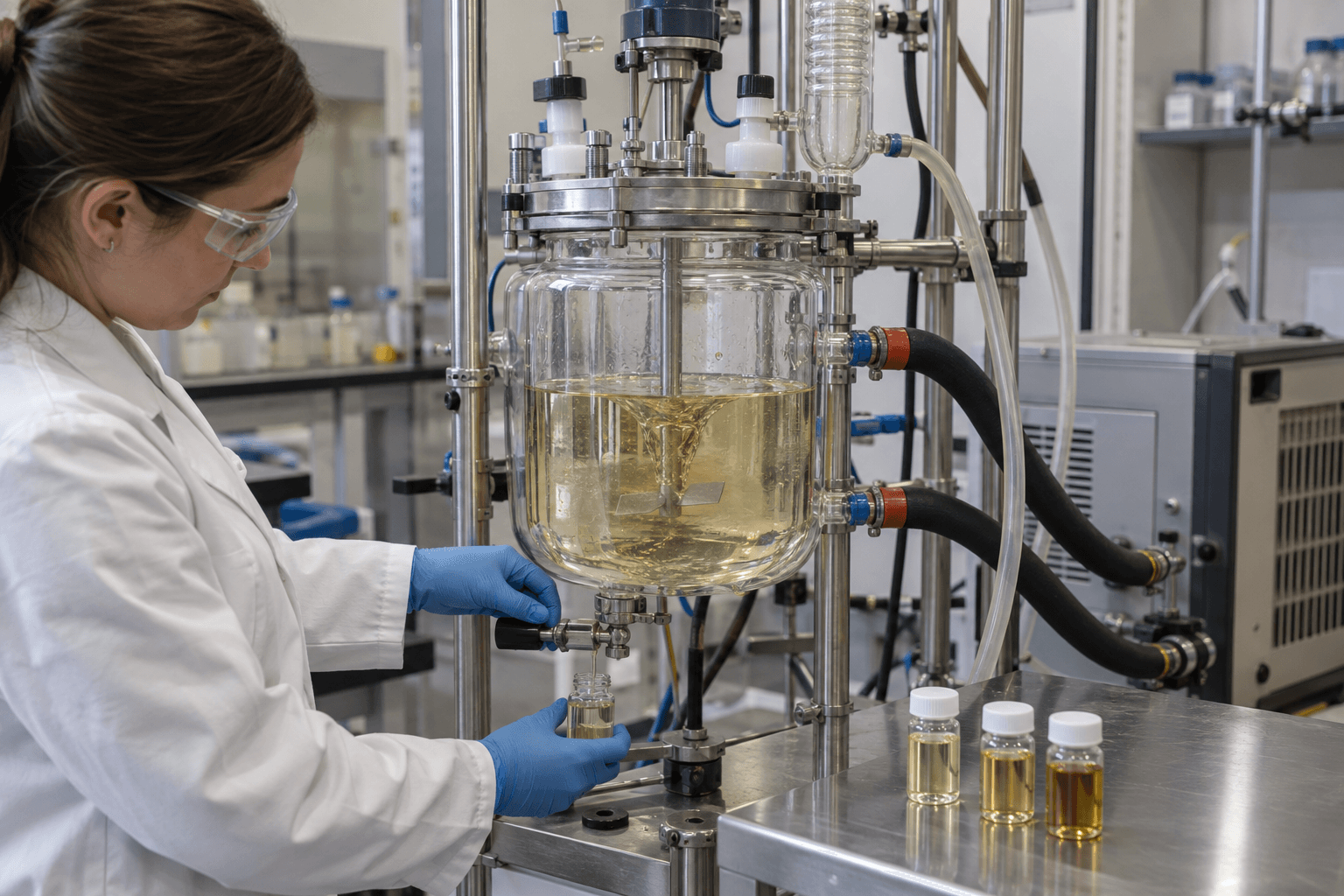
Laboratory preparation and sampling of demulsifier base chemistry in a jacketed glass reactor

Crude-oil demulsifiers are not a single chemistry. Commercial formulations can be multicomponent systems containing more than one surface-active base chemistry. The active molecules must be delivered into the crude, reach the water–oil interface on a useful timescale, and destabilize the native interfacial film sufficiently to promote droplet coalescence and phase separation. Performance depends not only on hydrophilic–lipophilic character, but also on molecular architecture, functionality, EO/PO distribution, molecular size, crude composition, temperature, water cut, salinity, concentration and process conditions.

This article reviews the major demulsifier base chemistries used or reported for water-in-crude-oil emulsions, how those chemical families are built at a reaction-pathway level, and what is known about how they act at the interface. It deliberately avoids treating any one mechanism or chemical family as universal.

1. Why crude-oil emulsions can be difficult to break

Produced crude commonly contains naturally occurring surface-active species, especially asphaltenes and resins, that can adsorb at the water–oil interface and form mechanically resistant interfacial films. Fine solids and other polar components can further reinforce these films. A demulsifier must therefore do more than simply lower interfacial tension: it must reach the interface on the relevant timescale and alter the interfacial structure sufficiently to allow water droplets to approach, drain the intervening oil film, and coalesce.

Research on heavy crude oils has shown that rapid interfacial adsorption or a large reduction in equilibrium interfacial tension is not, by itself, a guarantee of good dehydration. Molecular configuration, steric effects, crude composition, and the nature of the native interfacial film can dominate performance.

2. EO/PO polyethers: one of the central demulsifier platforms

How they are built

Polyether demulsifiers are produced by ring-opening alkoxylation of a molecule containing reactive hydrogen functionality. Depending on the desired architecture, the starter can be a glycol, glycerol, another polyol, an amine, or a multifunctional resin. Propylene oxide (PO) and ethylene oxide (EO) are then incorporated sequentially or in designed distributions to create polyoxypropylene and polyoxyethylene segments.

Changing the starter functionality, PO/EO ratio, sequence, block length and overall molecular size changes the resulting polymer’s architecture and phase affinity. A PO-rich segment is generally more oil-compatible, while increasing EO content generally increases hydrophilicity; however, field performance cannot be predicted from EO/PO ratio alone.

How they can work

EO/PO polyethers can migrate to the water–oil interface and interact with the native interfacial layer. Experimental and molecular-simulation studies support mechanisms that include competitive displacement or reorganization of asphaltenic interfacial material, weakening of the stabilizing film, and promotion of droplet coalescence. Recent molecular-dynamics work also suggests concentration-dependent behavior for a model EO/PO polyether, reinforcing the point that “the mechanism” can change with formulation and concentration.

Importantly, PEO/PPO block copolymers that perform well in lighter crudes may perform poorly in some heavy-crude systems where the asphaltene-rich interfacial network is especially resistant.

3. Alkylphenol–formaldehyde resin alkoxylates

How the base structure is built

This historically important family starts with an alkylphenol–formaldehyde condensation resin. The resulting phenolic resin contains multiple aromatic units and reactive hydroxyl functionality. The resin can then be oxyalkylated with EO, PO, or combinations of both to create a resin–polyether structure. Patent literature describes both ethoxylated alkylphenol–formaldehyde resins and mixed EO/PO derivatives across broad molecular-size ranges.

The key design variables are the alkyl substituent, resin backbone size and branching, degree of alkoxylation, EO/PO distribution and any subsequent functional modification. Regulatory acceptability must be checked for the intended market and use. For example, EU REACH Annex XVII contains restrictions on nonylphenol and nonylphenol ethoxylates for specified uses; this should not be generalized into a universal prohibition on every alkylphenol-resin demulsifier application.

Why resin alkoxylates can behave differently

The aromatic resin backbone gives these molecules a different spatial and interaction profile from simple linear polyethers. Studies on difficult heavy crude emulsions have reported that alkylphenol–aldehyde resin chemistries can outperform PEO/PPO block copolymers in specific systems, possibly because of different polar interactions and their ability to alter dense interfacial/emulsion layers. This is system-specific evidence, not a universal ranking.

4. Alkoxylated polyamines and polyethyleneimine-type bases

How they are built

Polyamine-derived demulsifiers use multifunctional nitrogen-containing starters such as polyalkylene polyamines and related amine structures. Amine functionality can initiate alkylene-oxide ring opening, and EO and/or PO may be added sequentially or as mixed oxides to build polyoxyalkylene substituents from the nitrogen-containing core. Historical patent literature documents oxyalkylated polyamines as a water-in-oil demulsifier class and also describes subsequent chemical modification of some polyoxyalkylene amine products.

Because one starter can contain many reactive sites, these materials can become highly branched or “star-like” compared with a difunctional glycol-started polyether. Functionality, branch density, EO/PO sequence and final molecular size therefore become major formulation variables.

How architecture influences function

Multibranched structures provide multiple interfacial contact points and can be tuned over a wide solubility range. In practice, they may be used alone or as one component of a blend to complement resin alkoxylates or lower-functionality polyethers. Their performance still depends on transport through the continuous oil phase and on whether their molecular architecture matches the interfacial film of the crude being treated.

5. Polyol-started and highly branched polyethers

Glycerol and higher-functionality polyols can serve as initiators for EO/PO alkoxylation. Compared with a linear difunctional polyether, a trifunctional or higher-functionality starter produces several growing polyether arms from a central core. This allows formulators to vary branching, molecular size, PO-rich and EO-rich domains, and overall solubility.

These products are often discussed commercially as polyether polyols or branched EO/PO demulsifier bases. The name alone is not enough to predict performance: two materials described as “polyether triols” can differ substantially in starter, molecular weight, EO/PO sequence, terminal composition and effective interfacial behavior.

6. Alkoxylated alcohols and related nonionic surfactants

Fatty or synthetic alcohols can be ethoxylated, and in some designs further propoxylated, through the same general alkylene-oxide ring-opening chemistry. These lower-functionality nonionic surfactants can modify wetting, solubility, interfacial transport and blend behavior.

They should not automatically be treated as complete demulsifier bases in every crude. In many practical formulations they are better viewed as co-components or solubility/interfacial modifiers whose value depends on the rest of the active blend.

7. Modified polyethers, resin esters and hybrid structures

Alkoxylated resins and polyethers can be further modified chemically. Historical demulsifier literature describes esterification of alkoxylated alkylphenol–formaldehyde resins with organic acids or anhydrides, producing glycol-resin ester structures. Other specialty approaches introduce ionic, zwitterionic or additional functional groups onto an existing polyether scaffold.

These modifications change polarity, molecular packing, oil/water affinity and interfacial interactions. They are best considered separate molecular designs rather than assuming that a modified polyether behaves like its unmodified precursor.

8. What EO and PO really change

Design variable General effect Why it matters
More PO character Usually increases oil compatibility Can improve transport through the continuous oil phase, but excessive oil affinity may reduce useful interfacial balance.
More EO character Usually increases hydrophilicity Can strengthen interaction with the aqueous side of the interface, but excessive hydrophilicity may alter partitioning unfavorably.
Block sequence Creates distinct EO-rich and PO-rich domains Changes molecular conformation, adsorption and phase behavior.
Starter functionality Controls number of polymer arms Changes branching, steric footprint and number of potential interfacial contacts.
Molecular size Changes diffusion, solubility and interfacial packing Too small, too large or simply mismatched structures may perform poorly for a given crude.

These are directional relationships, not selection rules. HLB, RSN or EO percentage can help characterize a product, but none is sufficient by itself to select the best demulsifier for a crude.

9. A more accurate picture of how demulsifiers work

  1. Transport: the active chemistry must dissolve or disperse in the treatment solvent and continuous oil phase sufficiently to reach dispersed water droplets.
  2. Interfacial adsorption: demulsifier molecules accumulate at the water–oil interface.
  3. Competition and reorganization: they interact with or displace part of the native asphaltene/resin interfacial layer, or otherwise change its molecular organization and viscoelastic properties.
  4. Film weakening and drainage: as the stabilizing film becomes less resistant, neighboring droplets can approach more closely and the intervening continuous-phase film can drain.
  5. Coalescence: droplets merge into larger water drops, increasing the effectiveness of gravitational or process-assisted separation.

This sequence is a useful conceptual framework, but not every demulsifier follows the same microscopic pathway. Recent research shows that different chemical families—and even different concentrations of the same polymer—can destabilize emulsions through different dominant mechanisms.

10. Why commercial demulsifiers are usually blends

A single molecule rarely provides the optimum combination of oil-phase transport, interfacial activity, film disruption, water-drop coalescence, separated-water quality and robustness to crude variability. Commercial formulations therefore commonly combine active bases with different architectures and solubility profiles in a solvent system selected for handling and delivery.

For example, a resin alkoxylate may provide one type of interaction with a rigid asphaltenic interface while a branched EO/PO polyether provides another balance of transport and coalescence. A lower-molecular-weight co-component may improve kinetics or blend compatibility. The correct combination is crude-specific and must be established experimentally rather than inferred from product family names.

11. What should be characterized when comparing demulsifier bases?

  • Starter chemistry and functionality
  • EO/PO composition and sequence where known
  • Approximate molecular-weight distribution
  • Branching or resin architecture
  • Solubility/dispersion behavior in the intended solvent and crude
  • RSN or related formulation descriptors where useful
  • Interfacial behavior and kinetics
  • Bottle-test performance: water drop, interface, residual emulsion and water quality
  • Compatibility with the complete formulation and other production chemicals
  • Performance across realistic temperature, dosage and crude variability

12. Practical formulation lesson

The most useful question is not “Which demulsifier base is strongest?” There is no universal answer. A better question is: which molecular architecture, or combination of architectures, produces the required interfacial response under the actual crude and process conditions?

This is why a base that performs exceptionally in one field can fail in another, and why small changes in EO/PO balance, branching, resin structure or blend ratio can materially change bottle-test and field behavior.

Frequently asked questions

Is a higher-EO demulsifier always better for water separation?

No. Increasing EO generally increases hydrophilic character, but optimum demulsification depends on the complete molecular architecture and the crude–water system. Excessive hydrophilicity can be as unhelpful as excessive oil affinity.

Are PEO/PPO block copolymers always weaker than resin demulsifiers?

No. Published heavy-crude studies show examples where resin chemistries outperformed PEO/PPO products, but this is not a universal hierarchy. PEO/PPO demulsifiers can perform very well in other crude systems.

Does low interfacial tension guarantee good demulsification?

No. Studies on heavy crude emulsions have shown that strong IFT reduction and fast interfacial kinetics alone do not guarantee efficient dehydration. Interfacial-film structure, molecular configuration, phase behavior and density effects can also matter.

Can RSN alone be used to select a demulsifier?

No. RSN is a useful formulation descriptor, but it does not uniquely define molecular architecture, adsorption kinetics or crude-specific performance. It should be interpreted alongside chemistry and application testing.

Conclusion

Demulsifier design is fundamentally an exercise in molecular architecture and interfacial matching. EO/PO polyethers, alkoxylated alkylphenol–formaldehyde resins, alkoxylated polyamines, polyol-started branched polyethers, nonionic co-components and modified hybrid structures each offer different combinations of transport, adsorption, steric footprint and interfacial interaction.

The synthesis pathway determines the architecture; the architecture influences interfacial behavior; and the crude/process system determines whether that behavior is useful. For practical formulation, the winning solution is therefore usually not a single “best base,” but a carefully selected blend validated under representative conditions.

Technical references

  • Rondón, M.; Bouriat, P.; Lachaise, J.; Salager, J.-L. Breaking of Water-in-Crude Oil Emulsions. 1. Physicochemical Phenomenology of Demulsifier Action. Energy & Fuels 2006, 20, 1600–1604. DOI: 10.1021/ef060017o.
  • Salager, J.-L.; Marquez, R.; Delgado-Linares, J. G.; Rondon, M.; Forgiarini, A. Fundamental Basis for Action of a Chemical Demulsifier Revisited after 30 Years: HLDN as the Primary Criterion for Water-in-Crude Oil Emulsion Breaking. Energy & Fuels 2022, 36, 711–730. DOI: 10.1021/acs.energyfuels.1c03349.
  • Pradilla, D.; Ramírez, J.; Zanetti, F.; Álvarez, O. Demulsifier Performance and Dehydration Mechanisms in Colombian Heavy Crude Oil Emulsions. Energy & Fuels 2017, 31, 10369–10377. DOI: 10.1021/acs.energyfuels.7b01021.
  • Acosta, M.; Reyes, L. H.; Cruz, J. C.; Pradilla, D. Demulsification of Colombian Heavy Crude Oil (W/O) Emulsions: Insights into the Instability Mechanisms, Chemical Structure, and Performance of Different Commercial Demulsifiers. Energy & Fuels 2020, 34, 5665–5678. DOI: 10.1021/acs.energyfuels.0c00313.
  • Yuan, S.; Wang, Z.; Yuan, S. Understanding the Chemical Demulsification Mechanism of Oil/Water Emulsion by Polyether Polymers. Industrial & Engineering Chemistry Research 2024, 63, 12680–12687. DOI: 10.1021/acs.iecr.4c01829.
  • US 4,626,379: Demulsifier Composition and Method of Use Thereof — examples of oxyalkylated phenolic resins and oxyalkylated polyamines.
  • US 6,225,357: Polymer Compositions for Demulsifying Crude Oil — multifunctional starters, EO/PO alkoxylation and optional crosslinking.
  • US 3,730,906 and US 4,737,265 — historical examples of esterified/modified oxyalkylated alkylphenol–formaldehyde resin demulsifier chemistry.

Related Horizons Apex resources: Demulsifier Solutions, Selecting a Demulsifier for Changing Crude Conditions, and Common Bottle-Test Errors.