
Make the comparison traceable
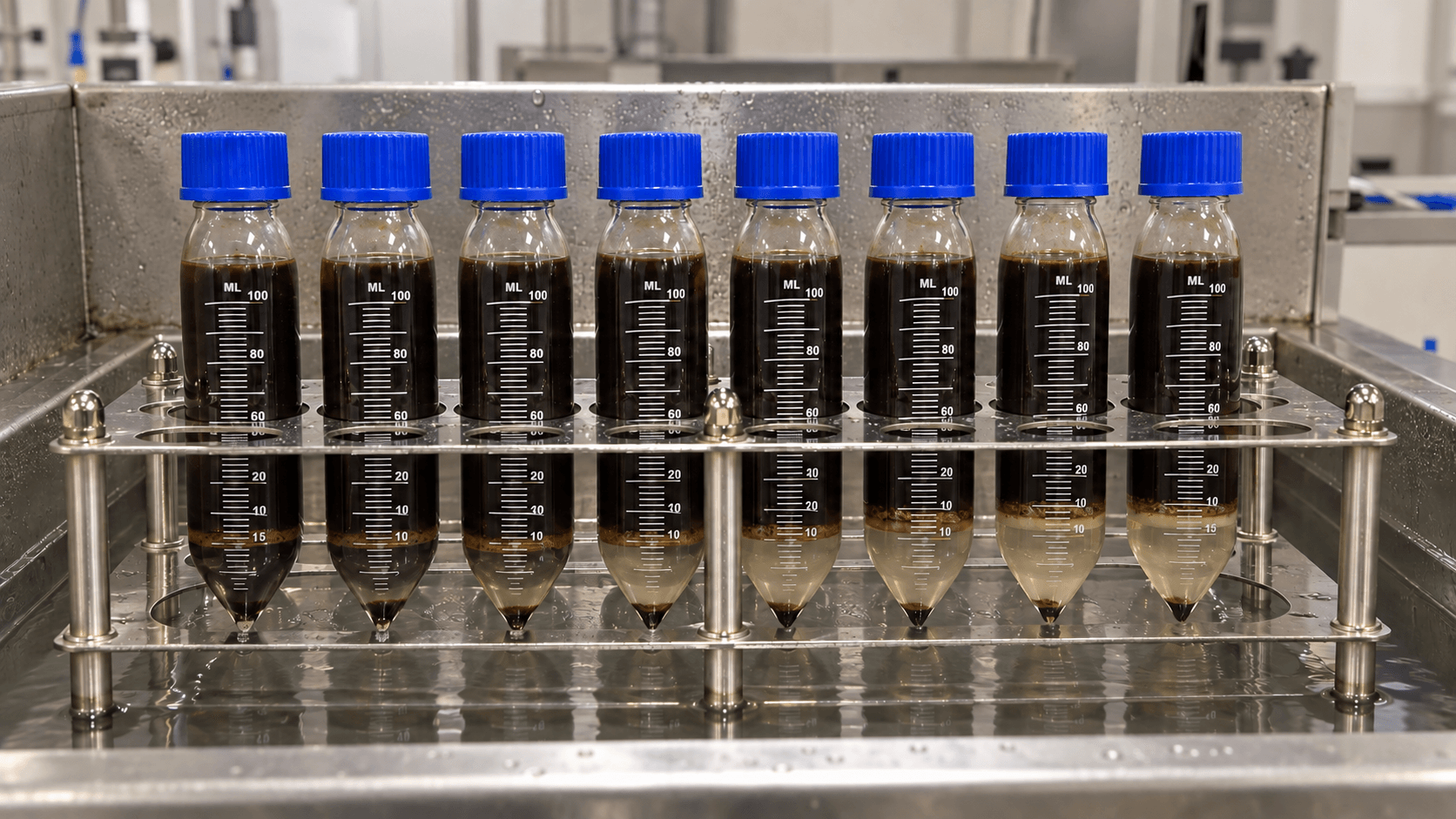
Before a demulsifier bottle test begins, record the crude source and handling history, water cut, test temperature, chemical identity, dilution and dose. Sample ageing, settling or temperature changes before testing can alter emulsion behavior; without traceable conditions, differences between candidates can be difficult to interpret.
Keep the method consistent
Use a defined preparation, mixing and observation procedure for every candidate. Keep bottle volume, mixing intensity and duration, temperature and observation times consistent. Record separation speed, interface quality, residual emulsion and separated-water appearance rather than relying on a single endpoint. Include the current treatment as a reference where appropriate.
Check the dosage calculation
Review the basis used for dosing and the preparation of every test solution. Confirm whether dosage is calculated on neat product or diluted solution and use the same basis for all candidates. Small preparation or pipetting errors can create misleading rankings, particularly when comparing products across a narrow dosage range.
Use the result for the next decision
A shortlist from bottle testing should inform a field evaluation, with operating data reviewed alongside the laboratory results. Bottle tests rank candidates under controlled conditions; they do not reproduce every field variable. For application-specific demulsifier selection and technical evaluation, see our Demulsifier Solutions page before planning the next evaluation step.