
Scale Inhibitor Base Chemistries in Oil & Gas: Types, Mechanisms, Advantages and Limitations
Scale Control · Chemistry Review
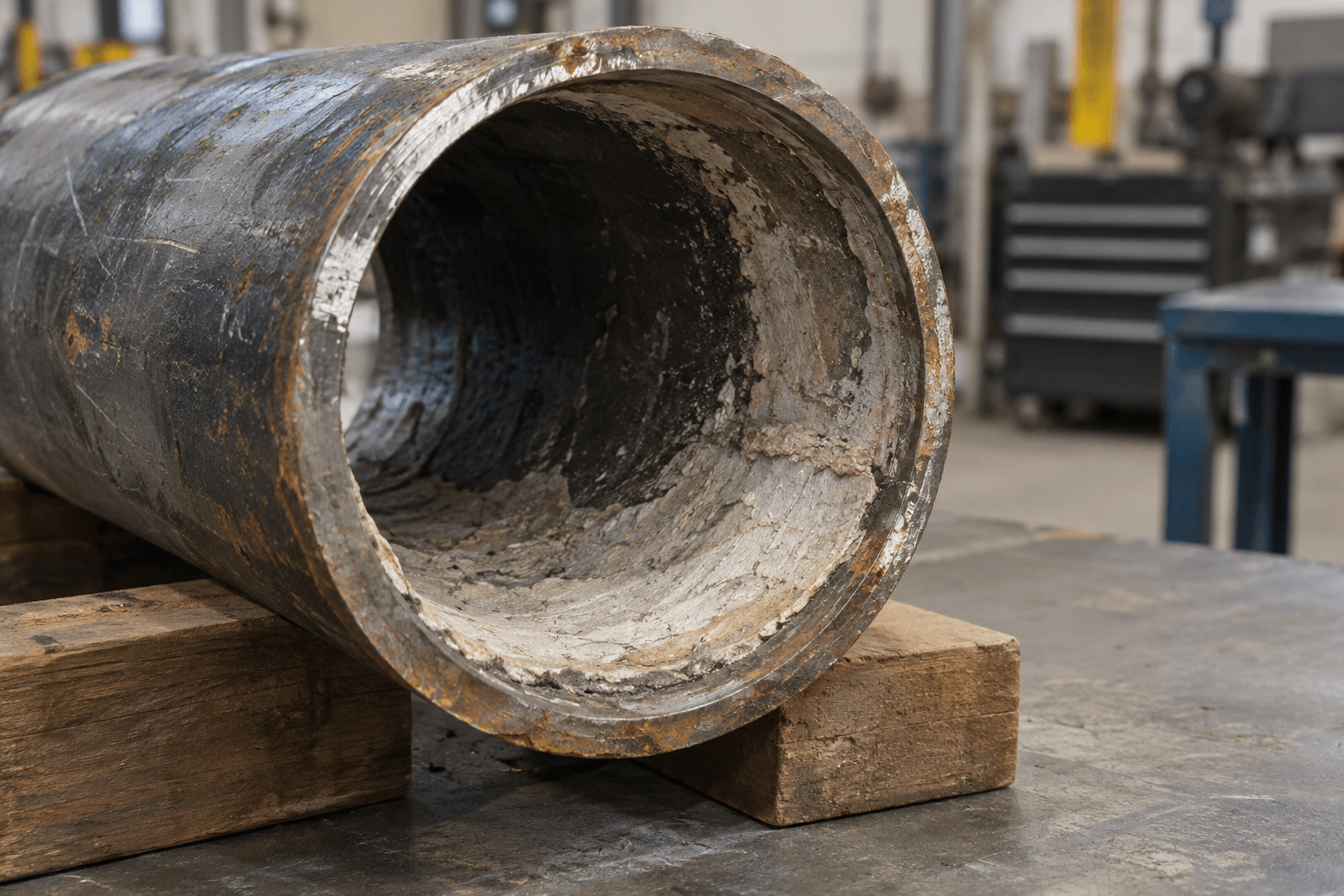
Oilfield scale inhibitors are not a single chemical family. The most established bases include aminophosphonates and several polymeric chemistries, especially polycarboxylates and phosphino-polycarboxylic acid (PPCA). Their performance depends on scale mineral, supersaturation, brine composition, temperature, inhibitor concentration, molecular architecture and delivery method.
This article compares the principal scale-inhibitor base chemistries used or studied in oil and gas, explains how their structures influence inhibition, and highlights why no one family should be treated as universally superior.
1. Scale inhibition is usually a threshold process
Oilfield scale inhibitors are commonly effective at concentrations far below those required to stoichiometrically bind all scaling ions. Their action can involve interference with nucleation, adsorption at active crystal-growth sites, modification of crystal morphology and dispersion of small particles. The relative importance of these effects depends on inhibitor chemistry and the mineral system.
This distinction matters: describing every scale inhibitor simply as a calcium chelator is scientifically incomplete.
2. Aminophosphonates
Aminophosphonates are among the most established oilfield scale-inhibitor families. Important examples include aminotris(methylene phosphonic acid) (ATMP), diethylenetriamine penta(methylene phosphonic acid) (DTPMP/DETPMP) and related multifunctional phosphonates.
Their multiple phosphonate groups provide strong interactions with dissolved metal ions and crystal surfaces. In threshold-scale control, adsorption on crystal-growth sites can inhibit further lattice development at concentrations much lower than stoichiometric sequestration would require.
DTPMP is widely reported for carbonate and sulfate scale control and is frequently used as a benchmark phosphonate in oilfield research.
3. Phosphonate strengths and limitations
Potential strengths: strong threshold-scale activity, extensive oilfield experience, effectiveness at low concentration in suitable brines and, for some phosphonate chemistries, strong interaction with formation minerals that can be useful in squeeze treatments.
Potential limitations: compatibility with high concentrations of divalent ions must be checked because metal–phosphonate precipitation can occur under some conditions; phosphorus discharge requirements can influence product selection; biodegradability can be poor for conventional phosphonates; and thermal/chemical stability remains structure- and environment-dependent.
A phosphonate that performs well against one scale under low saturation index should not automatically be assumed optimal for another mineral or a much higher supersaturation.
4. Polyacrylates and polyacrylic acid
Polyacrylate scale inhibitors contain repeating carboxylate functionality capable of interacting with ions and crystal surfaces. Molecular weight, charge density and end-group chemistry strongly influence performance.
Polyacrylates can inhibit nucleation and crystal growth and can help disperse small mineral particles. Their effectiveness is therefore not explained by one mechanism alone.
Strengths: flexible polymer design, good dispersion capability and broad industrial-water history. Limitations: calcium tolerance, molecular weight, salinity and temperature can strongly affect behavior; an excessively high or poorly selected molecular weight can reduce transport or compatibility.
5. Maleic and acrylic/maleic polymer systems
Maleic-acid-derived polymers and acrylic/maleic copolymers provide dense carboxylate functionality with architectures different from simple polyacrylate. Copolymer composition can be adjusted to change calcium tolerance, adsorption, dispersion and thermal behavior.
These materials are best treated as a design family rather than assuming that every maleate copolymer has the same oilfield performance. Monomer ratio, molecular weight and additional functional groups matter.
6. PPCA — phosphino-polycarboxylic acid
PPCA is an established polymeric oilfield scale-inhibitor chemistry. It combines a polycarboxylate-type polymer structure with phosphorus-containing functionality. Reviews of oilfield scale control list PPCA alongside DTPMP, ATMP, PAA and related commercial inhibitor families, and published studies have examined PPCA in continuous-injection, transport and squeeze-related contexts.
PPCA interacts with scaling ions and mineral surfaces through its carboxylate and phosphorus-containing functionality. It can interfere with nucleation and crystal growth and modify crystal morphology. Experimental gypsum studies show substantial crystal distortion in the presence of PPCA.
7. PPCA performance is condition-dependent
PPCA has been evaluated against calcium carbonate, calcium sulfate and barium sulfate systems, but efficiency depends strongly on conditions. Recent calcium-sulfate work demonstrated large changes in inhibition efficiency with inhibitor dose, temperature and calcium concentration. Earlier gypsum research also showed excellent inhibition at moderate supersaturation but sharply reduced performance at extreme supersaturation.
This is a useful general lesson: a product cannot be described as “effective at X ppm” without specifying brine, temperature, saturation state, test method and exposure time.
8. Sulfonated polycarboxylates and functional copolymers
Sulfonate-containing polymers introduce strongly ionic groups alongside carboxylates. Acrylic/sulfonic and other functional copolymers have been developed to improve solubility, calcium tolerance and performance under high-temperature/high-salinity conditions.
The benefit is not simply “more charge.” Functional-group distribution, polymer architecture, molecular weight and the target mineral determine whether sulfonation improves performance.
9. Polyaspartic acid and modified PASP
Polyaspartic acid (PASP) is a biodegradable, phosphorus-free polycarboxylate-type polymer investigated and applied as a lower-persistence scale inhibitor. Reviews report activity against inorganic scales including calcium carbonate and calcium sulfate, while oilfield research has also evaluated modified PASP against calcite and barite.
However, unmodified PASP should not automatically be described as a high-temperature replacement for conventional oilfield inhibitors. Peer-reviewed work reports weak thermal stability under harsh reservoir conditions and limited squeeze lifetime at elevated temperature.
Research has therefore focused on modified PASP containing sulfonate or phosphonate functionality. Studies under oilfield conditions show that such modification can improve performance against calcite and barite and alter calcium compatibility and thermal behavior.
10. Phosphonate–polymer hybrid strategies
Combining phosphonate and polymer functionality can provide complementary behavior. A 2026 water-flooding study compared DTPMP and PPCA individually and as blends against calcium- and barium-sulfate scaling. Under the investigated conditions, a 50:50 PPCA:DTPMP blend outperformed the individual inhibitors in static, dynamic and coreflood evaluations.
This should be interpreted as evidence of possible synergy under those test conditions, not as a universal optimum blend ratio. Different brines and scale threats can produce different rankings.
11. How the main chemistries differ
| Base chemistry | Main functionality | Common inhibition roles | Potential strength | Important limitation |
|---|---|---|---|---|
| Aminophosphonate | Multiple phosphonate groups | Crystal-growth inhibition, ion/surface interaction | Strong threshold activity and oilfield history | Divalent-ion compatibility and phosphorus constraints |
| Polyacrylate | Carboxylate polymer | Nucleation/growth interference, dispersion | Tunable molecular weight and good dispersion | Performance sensitive to MW, Ca, salinity and temperature |
| Maleic/acrylic copolymer | Dense carboxylate functionality | Growth modification and dispersion | Architecture can be tailored | Performance cannot be inferred from family name alone |
| PPCA | Carboxylate + phosphorus-containing functionality | Nucleation/growth interference, morphology modification | Widely used oilfield polymeric chemistry | Efficiency falls under some high-temperature/high-supersaturation conditions |
| Sulfonated copolymer | Carboxylate + sulfonate | Scale inhibition and dispersion | Potential high-salinity/calcium tolerance | Strongly architecture- and mineral-dependent |
| PASP | Biodegradable polycarboxylate | Growth/nucleation interference | Lower environmental persistence potential | Unmodified material can have poor HPHT stability |
12. Scale mineral matters
Calcium carbonate (calcite) formation is strongly influenced by pH, CO₂ evolution, temperature and supersaturation. Barium sulfate (barite) and strontium sulfate commonly arise when incompatible waters mix. Calcium sulfate behavior depends on temperature, ionic strength and phase stability.
A chemistry that is excellent for calcite may not have the same minimum effective concentration for barite or gypsum. Testing must therefore use the actual scale threat rather than a generic “scale inhibition” endpoint.
13. Molecular weight and architecture
For polymeric inhibitors, molecular weight affects diffusion, adsorption, dispersion and formation transport. Charge density and functional-group distribution influence interaction with ions and crystal surfaces. Two products both sold as “polyacrylate” or “PPCA” can therefore differ significantly in field performance.
14. Calcium tolerance and inhibitor precipitation
An inhibitor must remain available in the brine long enough to control scale. Some anionic inhibitors can interact strongly with calcium or other multivalent ions and lose effective soluble concentration through precipitation or phase separation. Compatibility testing is therefore part of scale-inhibitor selection, particularly for high-calcium brines and squeeze treatments.
15. Temperature and thermal ageing
Temperature affects scale thermodynamics, precipitation kinetics and inhibitor stability. Thermal ageing can change polymer molecular structure or functional groups, while increased supersaturation can overwhelm a dose that was effective at lower temperature.
Performance claims should therefore distinguish between a short static test at temperature and inhibitor stability after prolonged anaerobic thermal ageing.
16. Squeeze-treatment considerations
For downhole squeeze treatment, inhibition efficiency is only part of the design problem. The inhibitor must be placed into the formation, retained by adsorption or precipitation-related mechanisms, and later return in produced water above the required minimum inhibitor concentration.
Phosphonates and polymeric inhibitors can show different retention and return profiles. Rock mineralogy, brine chemistry, treatment pH and inhibitor structure all affect squeeze lifetime.
17. How scale inhibitors should be evaluated
- Predict the likely scale minerals and saturation tendency from representative waters.
- Use static bottle testing for initial screening under relevant brine and temperature.
- Determine a minimum effective concentration rather than comparing only one arbitrary dose.
- Use dynamic tube-blocking or other dynamic methods when deposition under flow matters.
- Check calcium/divalent-ion compatibility and thermal ageing.
- For squeeze applications, evaluate adsorption/desorption or coreflood behavior.
- Assess compatibility with corrosion inhibitors, biocides and other production chemicals.
- Validate performance against field water and operating conditions.
18. Why one test can give the wrong formulation answer
Static inhibition, dynamic deposition and formation retention are different properties. A product with excellent static inhibition can have poor squeeze return, while a strongly retained inhibitor may require a different placement strategy. A robust selection programme therefore separates intrinsic scale inhibition from delivery and retention performance.
Frequently asked questions
Are phosphonates always better than polymers?
No. Phosphonates and polymers emphasize different molecular interactions and can rank differently with scale type, brine and test method. Blends can also show synergy under some conditions.
Is PPCA a phosphonate?
PPCA is more accurately described as a phosphorus-containing polycarboxylic polymer or phosphino-polycarboxylic acid, not simply as a conventional aminophosphonate such as DTPMP.
Does a biodegradable inhibitor automatically perform better environmentally?
No. Biodegradability is one environmental property. Toxicity, bioaccumulation, discharge concentration and regulatory classification also matter, while technical performance and thermal stability must still be demonstrated.
Can one minimum inhibitor concentration be used for every field?
No. Minimum effective concentration is specific to scale mineral, supersaturation, brine chemistry, temperature, test method and operational conditions.
Conclusion
Oilfield scale-inhibitor chemistry spans aminophosphonates, polyacrylates, maleic/acrylic copolymers, PPCA, sulfonated polymers and polyaspartate-based materials. Each family offers a different balance of crystal-surface interaction, nucleation control, dispersion, compatibility, thermal stability and reservoir retention.
The useful question is not “Which base is strongest?” but “Which chemistry remains active, compatible and deliverable against the actual scale threat under the operating envelope?” Selection should connect molecular chemistry to mineral type, representative testing and the intended delivery strategy.
Technical references
- Zhang, P.; Shen, D.; Kan, A. T.; Tomson, M. B. Phosphino-polycarboxylic acid modified inhibitor nanomaterial for oilfield scale control: transport and inhibitor return in formation media. RSC Advances 2016, 6, 59195–59205. DOI: 10.1039/C6RA09973D.
- Zhang, P. et al. Phosphino-polycarboxylic acid modified inhibitor nanomaterial for oilfield scale control: Synthesis, characterization and migration. Journal of Industrial and Engineering Chemistry 2017, 45, 366–374. DOI: 10.1016/j.jiec.2016.10.004.
- Crystal growth inhibition of gypsum under normal conditions and high supersaturations by a copolymer of phosphino-polycarboxylic acid. Heliyon 2021, 7, e06064. DOI: 10.1016/j.heliyon.2021.e06064.
- Synthesis and Study of Modified Polyaspartic Acid Coupled Phosphonate and Sulfonate Moieties As Green Oilfield Scale Inhibitors. Industrial & Engineering Chemistry Research 2021. DOI: 10.1021/acs.iecr.1c01473.
- Performance evaluation of hybrid polymer-phosphonate scale inhibitors in oilfield water flooding operations. Petroleum Research 2026. DOI: 10.1016/j.ptlrs.2026.01.014.
Related Horizons Apex resources: Scale Inhibitors, How Scale Inhibitors Work at the Molecular Level, and Technical Expertise.