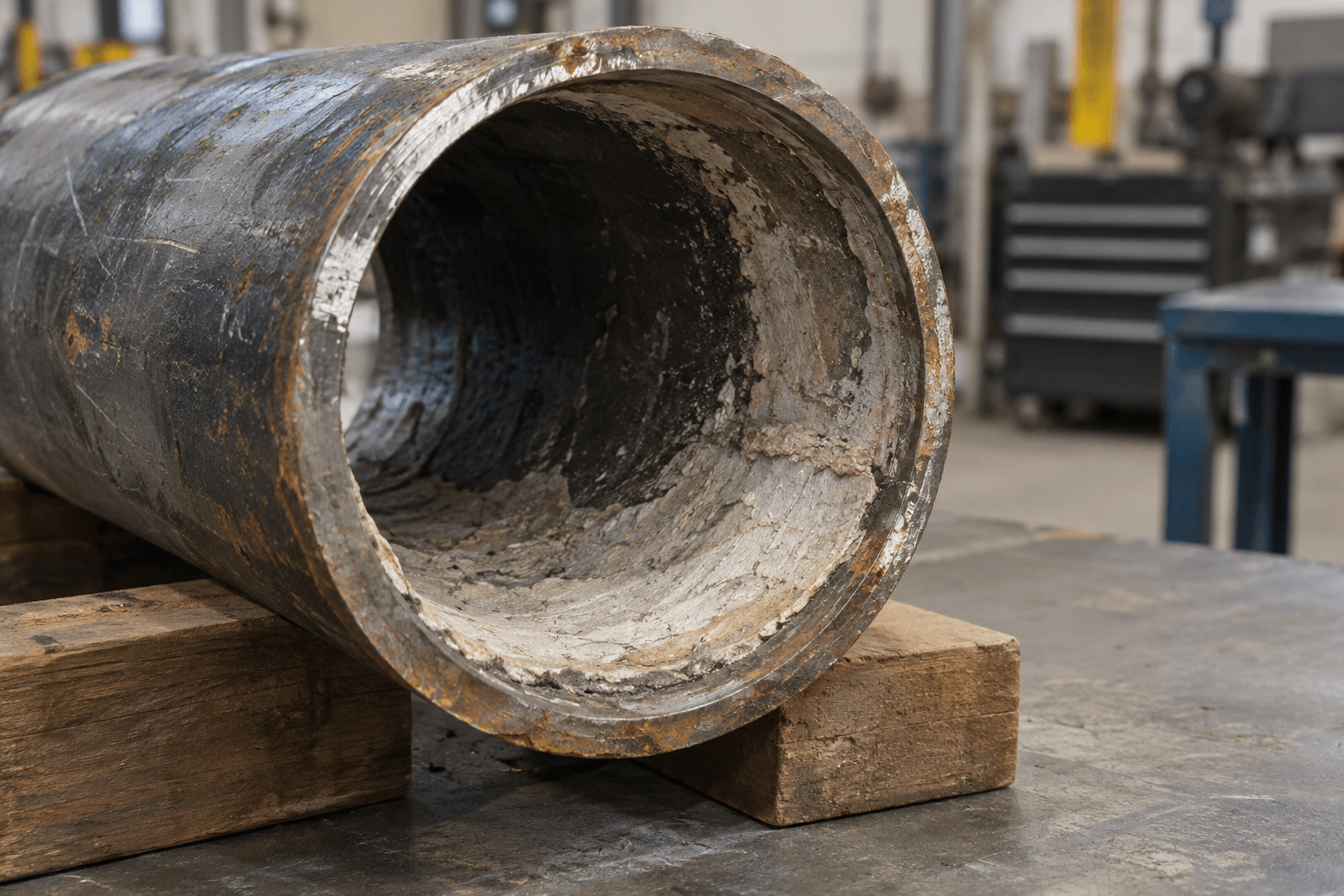
The challenge
Scale formation is driven by water chemistry, pressure and temperature changes, mixing of incompatible waters and operating conditions. Effective control starts with identifying the likely deposit type and the conditions that create supersaturation, precipitation and growth.
Our approach
We support scale inhibitor selection and evaluation based on water analysis, expected scale species, operating temperature, pressure, pH and system requirements. The objective is to identify an effective chemistry and dosage while considering compatibility with the treated fluid and other production chemicals.
Typical applications
- Oilfield water systems
- Industrial water and utility systems
Technical support
- Water-chemistry and application review
- Scale-risk assessment and likely deposit identification
- Performance criteria, dosage screening and test planning
- Compatibility and evaluation support
For a deeper technical discussion of precipitation, nucleation, threshold inhibition and field validation, read our technical review on how scale inhibitors work. For a chemistry-focused comparison of aminophosphonates, PPCA, polyacrylates, sulfonated polymers and polyaspartate systems, see Scale Inhibitor Base Chemistries in Oil & Gas.
Product availability, chemistry, concentration, packaging and regulatory status may vary by market and application. Final recommendations are subject to technical and commercial review.