
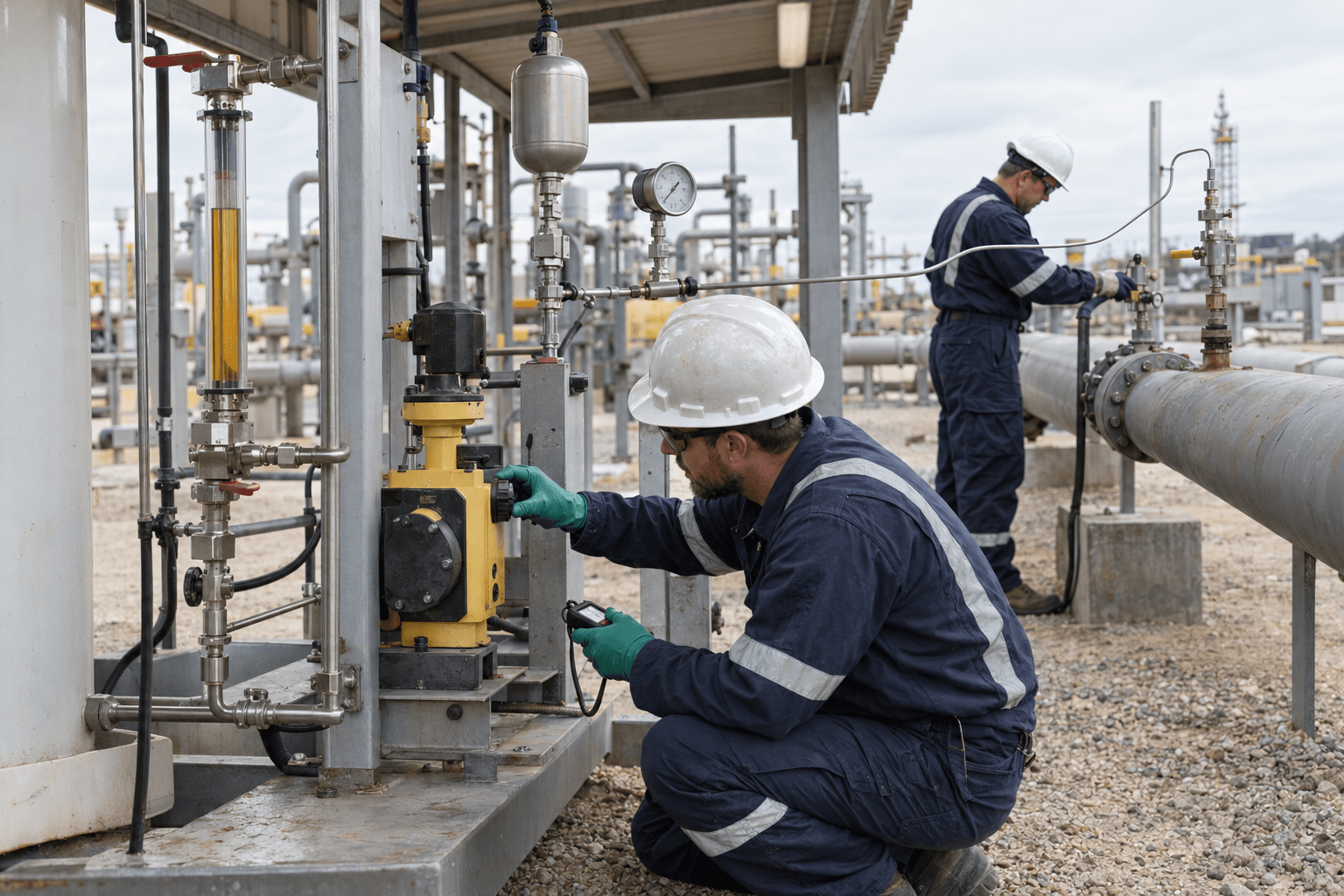
The challenge
Corrosion-inhibitor selection requires a review of metallurgy, fluid composition, water phase, temperature, pressure, flow regime and operating conditions. CO₂, H₂S and chloride exposure can also influence inhibitor selection and dosage.
Our approach
We support the selection and development of corrosion-inhibitor solutions for oil, gas, water and industrial systems. Depending on the application, technologies may include imidazoline-based and other film-forming inhibitor chemistries, with attention to dispersibility, compatibility, film persistence and performance under the target service conditions.
Typical applications
- Oil and gas production systems
- Gas and condensate service
- Water-containing and industrial systems
- MEG-related environments where applicable
Technical support
- Formulation and compatibility review
- Laboratory evaluation and optimization support
- Performance assessment using suitable corrosion-testing methods for the application
For a detailed comparison of laboratory methods—including NACE 1D182 wheel testing, weight-loss coupons, LPR, RCE, rotating cage, HPHT testing and flow loops—read How to Evaluate Oilfield Corrosion Inhibitors.
Product availability, chemistry, concentration, packaging and regulatory status may vary by market and application. Final recommendations are subject to technical and commercial review.